


May 8, 2025
How to Set Up iGaming Payment Processing in 2026
Read article
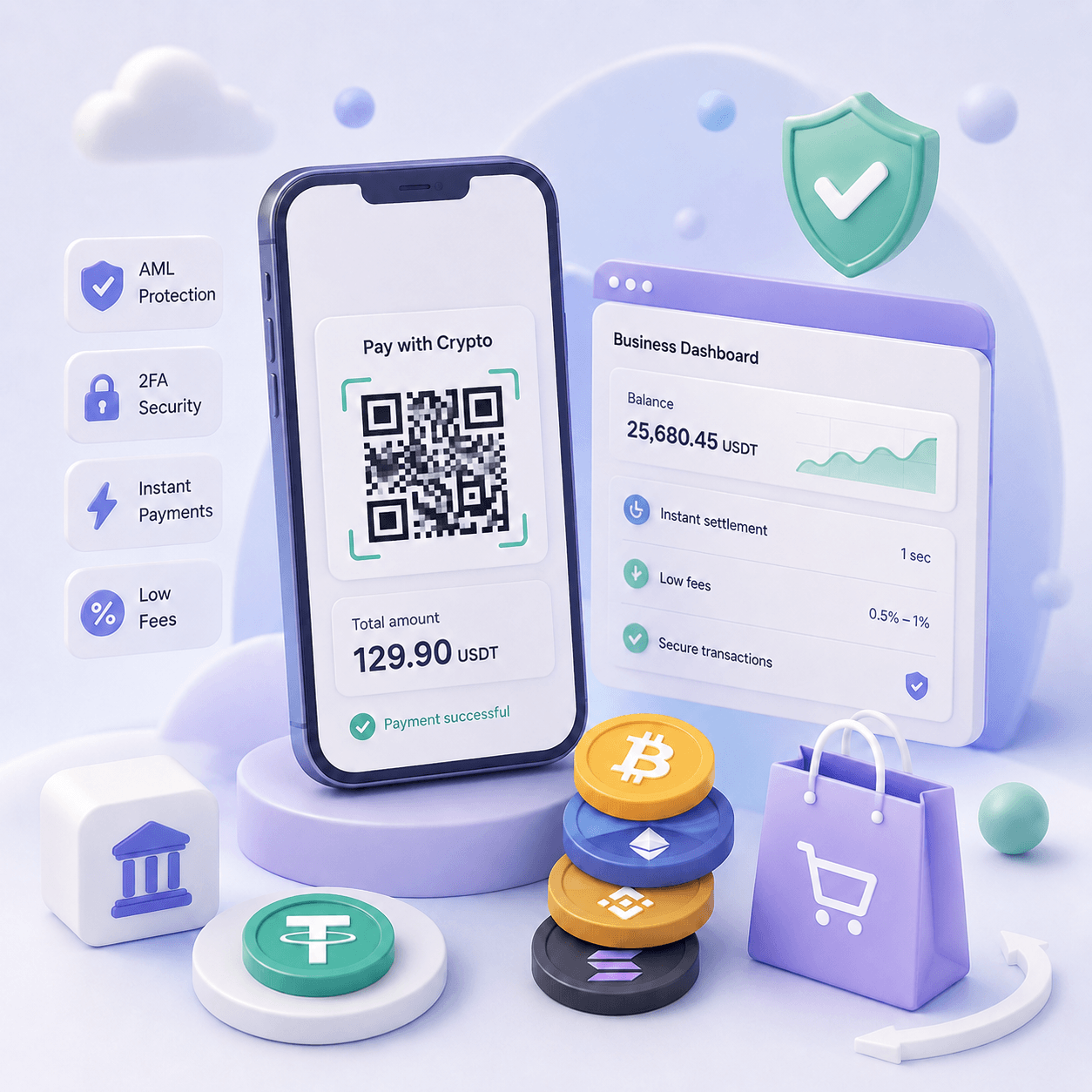
Ten vendor tabs are open and all ten say the same three things: fast launch, scalable, wide game portfolio. None of them shows a price. Open GiG, SOFTSWISS or Gamingtec and every path ends in the same place — a contact form and a sales call.
Here is what the tabs are hiding. You are not choosing a vendor. You are choosing whose licence your business operates under and whose payment rails your players' money travels on. Price, launch date, available payment methods and the cost of leaving are all consequences of that single choice.
It is also why two quotes for what looks like the same casino land an order of magnitude apart. The cheap one rents you a licence and a payment contract that already exist. The expensive one hands you software and leaves you to obtain both.
And if you came for a price: nobody publishes one. The pricing section below breaks the bill into lines you can ask about one by one.

Every platform on the market does roughly the same things. It opens player accounts, holds balances, serves games, applies bonus rules, runs KYC checks, pays winners and reports on all of it. The feature lists are near-identical because the functional requirements are, which is why comparing them line by line tells you almost nothing. Often it is literally the same software underneath: the same vendors sell all three models below. The contract is what changes.
Take this if you have traffic and no licence, and the question you are answering is "does this market convert at all". Entry is cheap by the standards of this industry, launch is measured in weeks, and someone else carries the regulatory weight while you find out whether your acquisition maths works.
What you are actually signing up for:
Don't take this if you already know the product needs its own payment routing, its own bonus logic, or a player base you can carry somewhere else. The exit clause will cost you, and you hit it exactly when the project starts working.
Get two answers in writing before you sign: which payment methods you can add yourself, and on what schedule the supplier releases your money. Everything else is negotiable later.
Take this if the licence is yours or being applied for, and you intend to still own the players in three years. The platform is deployed under your brand and your permission, usually with little or no revenue share, and the launch runs in months.
What you are actually signing up for:
Don't take this if you have no licence in progress, nobody who has run compliance before, and no budget for six months of running costs before the first deposit. Turnkey with an empty compliance seat is the most expensive way to discover you needed white label.
Take this if you already operate, the platform is the constraint, and you can say in one sentence what a custom build does that a bought one cannot. In practice: an operator with revenue, a technical team and a specific mechanic — proprietary game logic, an unusual wallet, a jurisdiction nobody's platform supports.
What you are actually signing up for:
Your slowest integration sets the date. Game aggregation and payment certification take months each on their own.
Don't take this if the motivation is control in the abstract. "We want to own our technology" with no named mechanic behind it is how projects spend years rebuilding what a turnkey vendor deploys in months.
GiG, SOFTSWISS, Gamingtec, GR8 TECH, iGaming Platform — checked one by one, and not one of them publishes a rate card. Every pricing path ends at "contact sales", "get a proposal" or "book a demo". Pricing is set per deal, on your projected volume, your markets and how much of the revenue share the vendor thinks it can hold. So you cannot compare offers on price before the first call.
Four things move a quote, and secrecy is none of them. The model: white label is a small entry fee plus a percentage for as long as you stay, turnkey a larger fixed fee plus running costs — so the cheaper signature is often the more expensive third year. Compare over three years of running and read the setup fee last. The word "turnkey" itself: one vendor quoted the platform core, the other quoted platform, game aggregation, CRM, affiliates, hosting and compliance tooling, and both wrote the same word on the proposal. Integration count: anything outside the vendor's standard bundle is scoped work with its own price, so ask for the bundle as a list and price the difference. Market count: each extra market adds certification, a language, a currency, local payment methods and local reporting.
The anatomy of the bill. Split it in two, and ask for every line by name.
On the vendor's invoice, the one-off part is setup and deployment, brand and front-end work, custom development at day rates, and each non-standard integration. That is the number people quote when they say a casino costs X, and it is the smallest part of a three-year total. The monthly part — platform fee, support tier, hosting — is the dangerous one, because it does not scale with players. A month with no traffic costs the same, which is what makes a slow launch expensive. Then the percentage: under white label, the revenue share on NGR; under turnkey, ask whether game content bills as a share of what it generates, and on which base, GGR or NGR. Payment processing is a percentage of volume in every model.
From everyone else come separate invoices: game aggregation, the KYC vendor, cloud hosting, each payment provider, certification labs. Watch for a payment provider's monthly minimum — a fixed bill for a service you are not yet using. Add the regulator, whose fees are the only published price list in this business and appear in the licensing section below; under white label you pay none of them, because they sit inside the share. And add payroll: a compliance officer, support cover, risk and payments people. It never appears in a proposal and it is frequently the largest recurring line in the business.
Because every one of those lines is negotiated per deal, the numbers circulating online are third-party estimates, and they disagree by an order of magnitude. Agency write-ups put a turnkey setup fee anywhere from the mid-five figures to the mid-six, and a monthly platform fee anywhere from $5,000 to $50,000. The one figure that recurs across independent sources is the white label revenue share of 10–30% of NGR. The spread itself is the finding: any number you plug into a budget today is somebody's guess.
What you can compare before the call is structure — whose licence, whose accounts, what share, what happens on exit, and which lines arrive from someone other than the vendor. Those answers are free, and they move the total far more than the setup fee does.
Whatever the model, a working online casino platform is these modules. The note on each one is which side of the invoice it usually falls on.
One question to settle early if you plan to host an iGaming platform yourself: most vendors deploy on their own cloud and treat self-hosting as an enterprise option, if they allow it at all. Self-hosted gives you data residency — sometimes a licence condition — and a much bigger DevOps bill. Ask where the database physically lives, who holds administrator access, and how you get a full export.
The software is the predictable part. Deployment is the thing vendors do over and over, and they can schedule it. What slips is money coming in.
Card acquiring for gambling runs under MCC 7995, the merchant category code the card networks treat as high-risk and which needs the acquirer's explicit approval. A company licensed three weeks ago has no processing history to show for it. Expect declines. Expect whoever does say yes to price the risk: a rate above what a normal merchant pays, a rolling reserve — a slice of every settlement withheld for a fixed period before release — and a ceiling on the turnover you are allowed to process.
All three are set case by case at underwriting, so you cannot plan cash flow until you have them in writing. This is months of correspondence. Start the payment track in parallel with the platform track, on day one: it is the longer of the two.
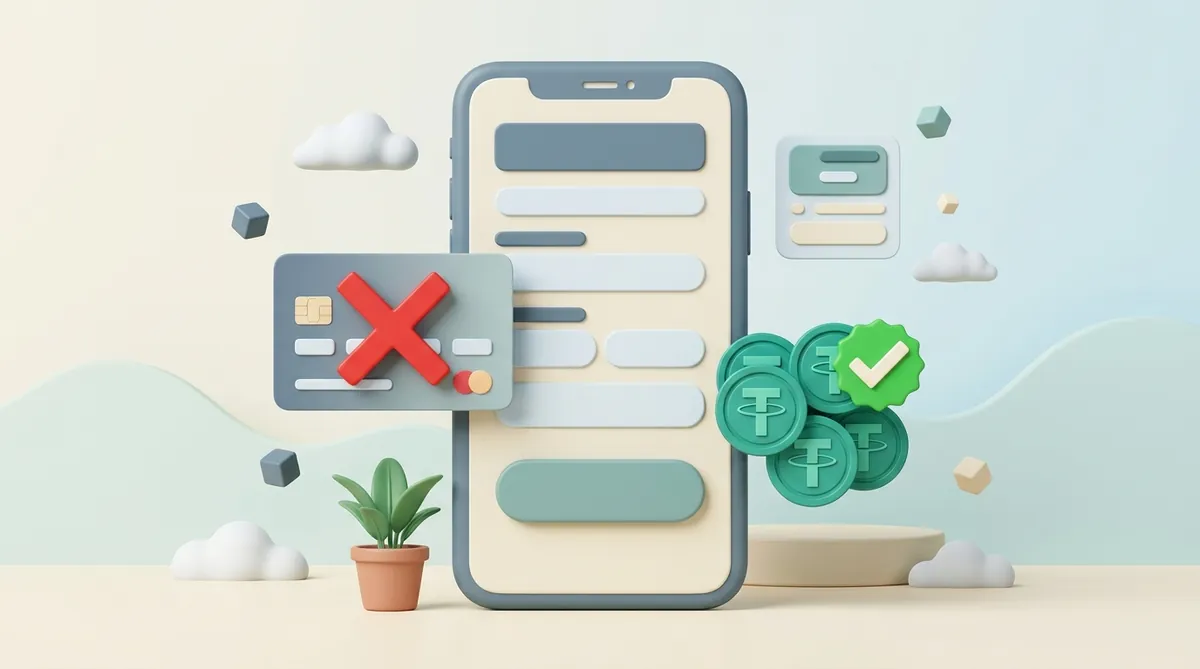
Crypto belongs in this section for a structural reason. A crypto payment channel needs no acquirer's approval of your MCC, your licence age or your chargeback ratio: settlement happens on a public network and the processor's checks are its own. E-wallets and local bank transfers also sidestep the card acquirer, but each brings its own contract, its own country list and its own appetite for gambling. For a new operator, crypto is often the deposit channel that can be live first. How that flow works end to end is covered in the guide to crypto payments for casinos and betting platforms.
Three things decide whether a crypto channel earns its place on the payment page.
Integration shape. A processor that offers a payment link, a hosted checkout widget and an API with webhooks can be attached to a platform you did not build: the platform calls out, the webhook credits the player's balance in PAM. CryptumPay works this way. That is the practical test for the "one module hurts" reader — if your platform permits a third-party payment provider, you swap payments without touching anything else. If it does not, you have just found the real reason to change platforms.
What it costs, and what the money is worth when it lands. Here the two routes compare directly, and the difference is when you find out. The card route gives you a rate, a reserve and a cap that you learn at underwriting, months after you started asking. The crypto route is priced before you sign: CryptumPay charges 1% per successful payment, from 0.5% at volume, and the fee can be passed to the player. Deposits arriving in BTC or ETH would otherwise leave you holding a volatile balance against a fixed liability to the player; CryptumPay converts incoming funds to USDT on arrival, and you can withdraw to your own wallet at any time with no minimum. Suspicious funds are held before they reach the balance, which is the AML behaviour your compliance officer will ask about.
Network choice and screening. The same USDT costs different amounts to move depending on the chain, and player-side friction is a conversion problem — the trade-offs are in choosing a USDT network for a business. A regulator will also ask what happens to a flagged deposit before it reaches a player's balance, and how that screening works in practice is worth reading before you write your AML policy.
None of this replaces cards. Players who have never held a stablecoin will not start for your casino. The realistic target is a payment page with a card route in progress and a crypto route working from day one. The wider iGaming payment stack — methods, routing, reconciliation, payouts — is where the rest of that build is laid out, and if cards are your bottleneck specifically, how crypto acquiring works covers the mechanics of the alternative.
Curaçao is the usual first licence for a new operator, and the regime has just been rebuilt. The National Ordinance on Games of Chance (LOK) replaced the 1993 ordinance, and licences are now issued directly by the Curaçao Gaming Authority instead of through the master licence holders that resold sublicences for decades. Any guide still describing the master-licence route is out of date.
The fees are the one published price list in this whole business. Curaçao charges EUR 4,592 to apply, plus EUR 150 for each ultimate beneficial owner (the real person behind the company), and then EUR 47,450 a year for an operator licence — EUR 24,490 to the treasury and EUR 22,960 to the regulator — per the CGA's published fee schedule. A B2B supplier licence is EUR 24,490 a year. Malta charges €5,000 to apply. A supplier licence there runs €25,000–€35,000 a year scaled to revenue; an operator licence is a fixed €25,000 a year plus a compliance contribution that moves with gaming revenue — so the two jurisdictions are not comparable line for line.
Three dates, one standing condition and one processing clock decide what your corporate setup has to look like:
Malta is the other common answer, and a different product: an EU licence with the credibility that opens payment provider doors Curaçao does not. It costs more in fees, staffing and time. Suppliers have a permission of their own to obtain, the Critical Gaming Supply licence — the MGA's B2B licence pages set out the four gaming types and the fees above. The MGA does not publish a review timeline; ask for an indicative one at the pre-application stage.
The consequence for your payment plan: acquirers read the licence before they read the business plan, and an EU licence is an easier conversation than a fresh Curaçao one. Ask any prospective payment provider which licences they onboard before you choose the jurisdiction.
This is a description of how the market is structured, not legal advice, and gambling rules change frequently. Verify current requirements with the regulator and a lawyer in your jurisdiction on the date you apply. Facts in this section were checked on 8 August 2026 against the CGA's published fee schedule and notices and the MGA's B2B licence pages.
Ask these on the first call, before the demo. Each is answerable in one sentence, and evasion on any of them is itself the answer.

Write the answers down. Two vendors giving different answers to question 1 or 2 are selling different businesses, whatever their feature lists look like side by side.
White label runs in weeks once the contract is signed, because you are joining an existing licence and existing payment integrations. Turnkey is months, and the pacing items are the licence and the payment approvals. Plan the launch date backwards from your acquiring timeline, and the software will be ready before you are.
Technically yes, and operators do it. What rarely transfers is the player base: accounts, balances and KYC records live under your supplier's licence, and moving a verified player to a new legal entity usually means re-registering and re-verifying them. Ask about migration in the first meeting, when you still have leverage.
PAM — player account management — is the module that holds player identity, balance, verification status and limits. In any packaged platform it is included and central. It becomes a separate purchase only in API-first or custom builds, where some operators licence a standalone PAM and attach games and payments around it.
Curaçao if the budget is tight and you are aiming at grey markets — jurisdictions with no local licensing regime, where operating is neither licensed nor expressly prohibited — or at a crypto-leaning audience. Malta if you need EU credibility, banking relationships and payment providers who take you seriously. The fee gap is visible above, and so is the difference in how acquirers respond. Either way, the Curaçao company has to be real: incorporation on the island with a resident director is already a condition of applying.
That depends on the contract and the API, and the two often disagree. A turnkey deployment usually allows it; white label usually does not, because the money is not landing in your accounts in the first place. Get the answer as a documented API endpoint rather than a sales assurance — it is the single clause most likely to decide whether you outgrow the platform in year two.
Create an account and connect the checkout yourself, or talk to sales and we will plan the integration with you.

