October 25, 2026
CEX or DEX: what's the difference, and which kind of crypto exchange should you use?
Read article
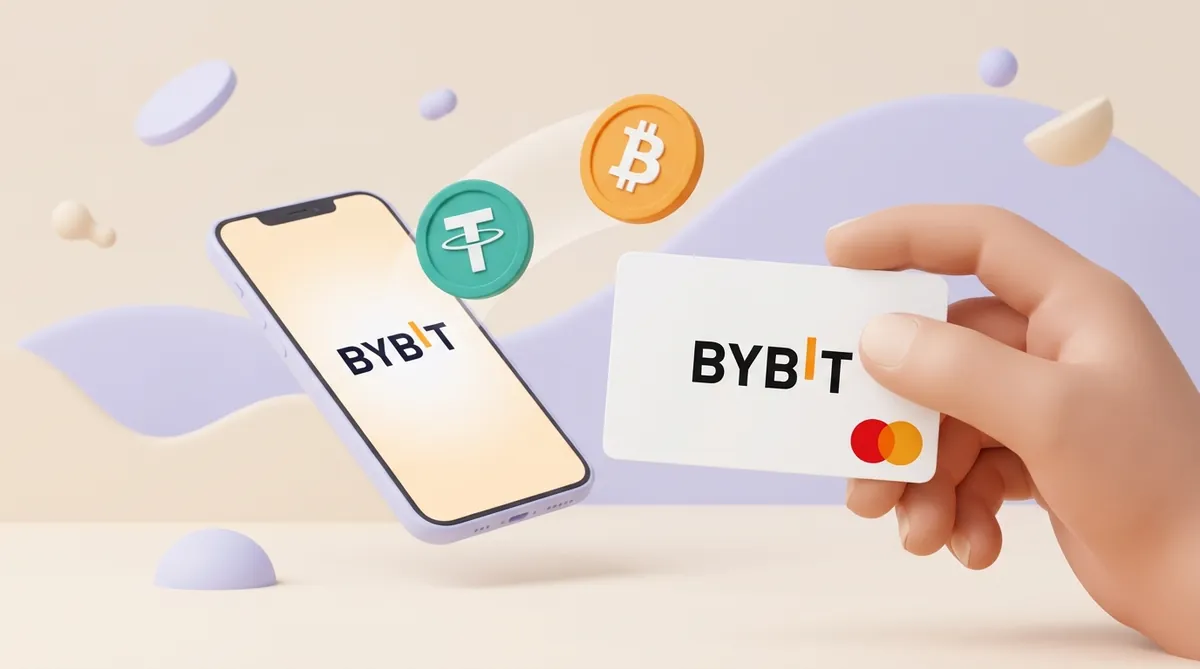
The Bybit Card is a debit card that spends straight from your Bybit exchange account: at checkout it sells the crypto you chose and pays the shop in ordinary money. You can apply in the Bybit app once you have verified your identity, but only if you live in a region the card covers, and the US is not one of them. The virtual card is free, and in most regions the main cost is 0.9% each time the card converts crypto.
The card has no balance of its own. It is linked to your Funding Account, the part of your Bybit account where deposits land, and it spends whatever sits there.
When you pay, Bybit first checks whether you hold the currency of the purchase, for example euros for a bill in euros. If you do, the card uses that money. If you don't, it sells the coins you picked in the card settings, in the order you set, and the card network pays the shop.
Take a café in Lisbon. The bill is €12 and you hold only USDT. Bybit sells about 12 euros' worth of USDT at its own exchange rate, adds the conversion fee, and the café receives euros as it would from any other card. The café never sees crypto at all.
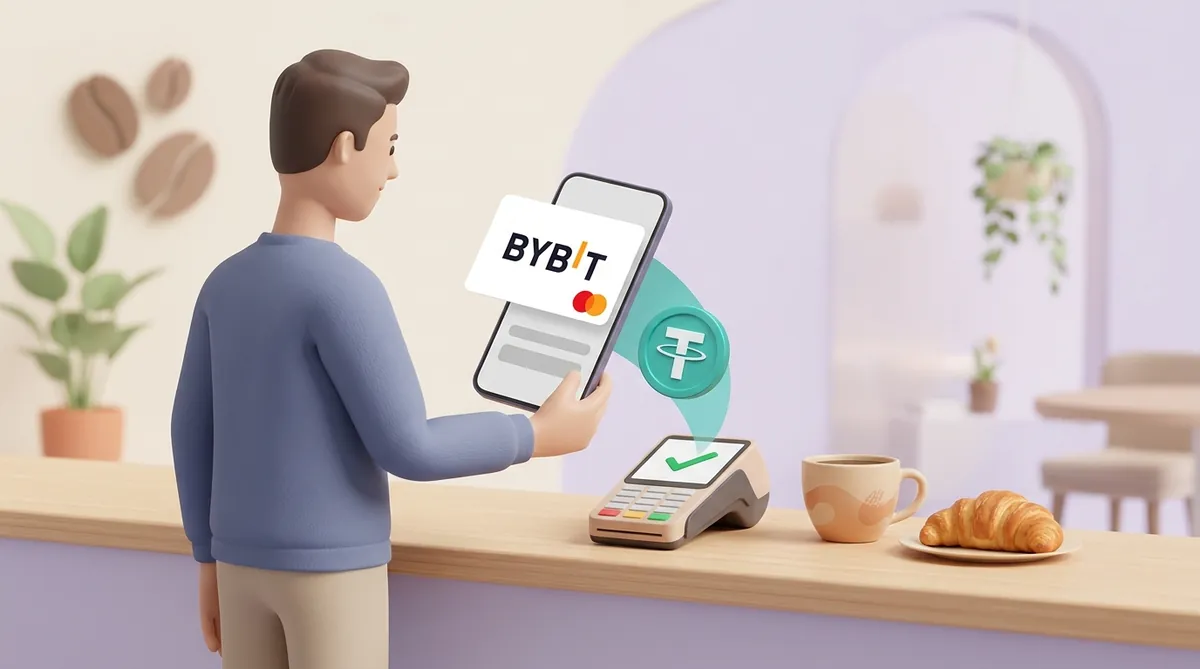
Most cards issued by crypto exchanges follow this pattern: the coins stay crypto until the moment of payment, and the shop sees a normal card. If you are still deciding whether a card like this suits you at all, start with how crypto debit cards and stablecoin cards work.
Because the shop sees a regular card, the Bybit Card works wherever its card network is accepted: in shops, online, for subscriptions and at ATMs. There are exceptions on Bybit's side. Bybit does not support some kinds of merchants, such as gambling sites, securities brokers and other crypto exchanges, so a payment there is declined even with money in the account.
Bybit does not run one card for the whole world. It runs regional programs, each with its own issuer, fees and rewards, and you can join only the program of the country you live in.
As of November 2026, the card is offered in these regions:
Having a working Bybit account in your country does not mean the card is offered there. The list changes, so the final answer is the country list in the card section of the Bybit app: if your country is missing from it, the card is not available to you.
If you live in the US, no. Bybit's service agreement excludes US residents from all its products, the card included. The US is not alone on that list: Canada, for one, is excluded too.
Bybit checks where you live during identity verification. Getting round that with a VPN or someone else's address breaks Bybit's terms and puts the account and the money in it at risk.
The exclusion is about where you live. A card issued to a resident of an eligible region runs on the card network like any other foreign card, so a trip to the US is not ruled out by it. Every purchase in dollars then carries the foreign exchange fee of your home program.
The application lives inside the Bybit app or website, and the virtual card comes first. Here is the order:
The identity check is the step where most people stop and wonder why an exchange needs a passport and a utility bill. Card issuers and exchanges are both required to know who their customers are, and the reasons are laid out in what KYC is and why the exchange wants your ID.
Mostly, the card costs money when you use it rather than when you hold it. The fees depend on your regional program, but they fall into the same groups everywhere:
Here is how that adds up. Someone with the EU card holds only USDT and buys a €50 jacket online. The conversion fee is about €0.45, and Bybit's own exchange rate may add a little more. Pay the same €50 with euros already in the account, and the purchase costs nothing extra.
That is why many cardholders keep their spending money in a stablecoin. A coin pegged to the dollar keeps its value between purchases, so a €50 bill needs about the same amount of coins next week as today. Bitcoin can move by several percent in that time. If stablecoins are new to you, here is how USDT holds its dollar value and what it costs to send.
Cashback comes from the same regional programs, so it works differently in the EU and in the rest of the world.
On the EU card, rewards run under Bybit EU's own rules rather than those of Bybit.com, so look up today's rate in the card section of the Bybit EU app before relying on it. Since January 2026 EU cardholders can choose whether cashback arrives in USDC or in bitcoin.
On the cards issued through Bybit.com, the rules changed on 5 October 2026. Since then only purchases paid with crypto earn rewards; spending money you hold in the purchase currency earns nothing. The base level pays 2%, capped at 5 USDT a month. That cap is reached after about 250 USDT of spending, and anything above it earns nothing that month. Higher levels pay up to 10% with larger caps, but they require VIP status or a high monthly spend.
Not every transaction counts. These earn no cashback at all:
On the EU card, points also stay pending for four days before you can redeem them.
In practice, someone on the global base level who spends 600 USDT a month gets 5 USDT back, not 12. The 2% figure only holds up to the cap.
There is nothing to top up on the card itself. Topping up means putting money into your Bybit Funding Account, and that money sits on an exchange: Bybit holds it for you.
A balance on an exchange is not a bank deposit and is not protected like one. Keep there roughly what you plan to spend and store the rest elsewhere. If you have never weighed that choice, here is the difference between keeping crypto on an exchange and in a wallet only you control.
There are several ways to put money into the Funding Account:
P2P has risks of its own, because the other side of the deal is a stranger rather than Bybit. Typical tricks are a seller who claims your payment never arrived and a buyer who asks to finish the deal outside the platform. Before your first trade, read up on how to buy and sell crypto through P2P more safely.
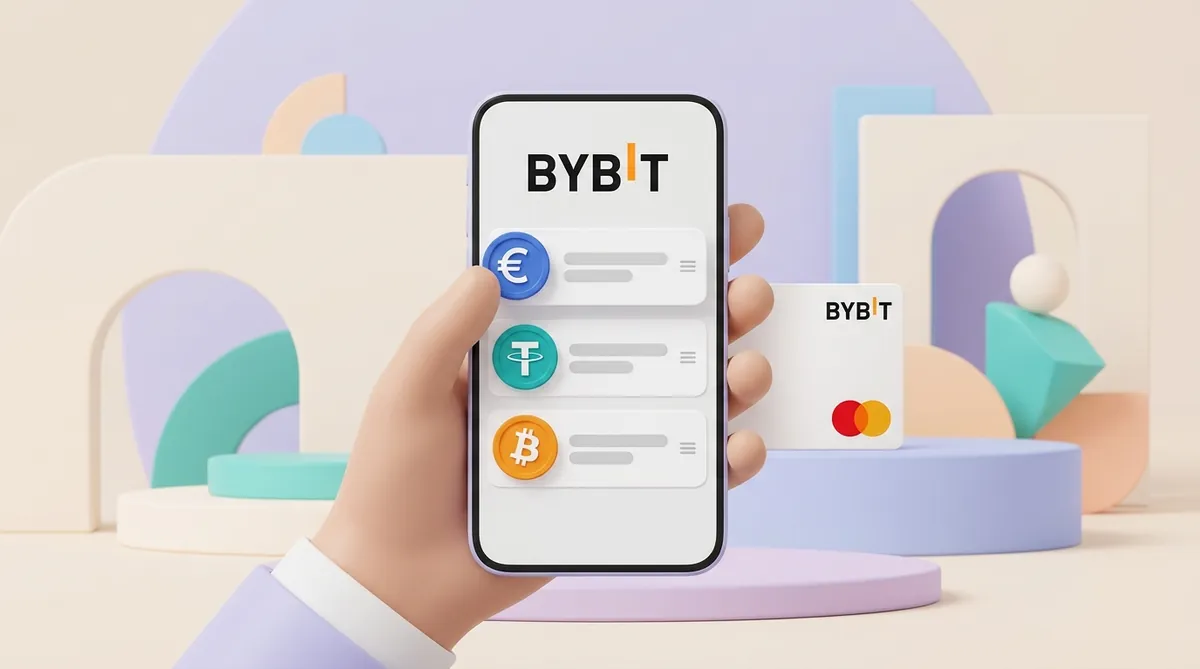
Once the money is in, open the card settings and set the payment order. Put the currency you spend in first and a stablecoin second. That way the card uses money that needs no conversion before it starts selling coins.
The Bybit Card is a way to spend crypto held on Bybit at any shop that takes cards. Whether you can get it depends on where you live, and the card section of the app has the final list. There is no annual fee, and spending costs a conversion fee each time crypto is sold.
Keep spending money in the purchase currency or a stablecoin and set the payment order so cheap money goes first. Treat cashback as a small bonus with a cap, not a reason to spend more.
It depends on your region. The EU and Australian cards, along with most other programs, run on Mastercard, while a few regional programs issue Visa cards. For paying in shops the difference rarely matters, since both networks are accepted almost everywhere cards are.
It depends on your regional program, because support for phone wallets differs from country to country. In Argentina, for example, Bybit has connected the card to Apple Pay. Where your program supports a wallet, you add the virtual card to your phone from the card section of the Bybit app and can pay before the physical card arrives.
Limits are set per regional program and per tier, so there is no single number for every card. On the EU card, cash from ATMs is capped at €2,000 a day. You can request a higher tier in the card settings.
Create an account and connect the checkout yourself, or talk to sales and we will plan the integration with you.