

August 9, 2026
Crypto Payment Gateway: What It Really Costs and How to Connect It
Read article

Yes, you can accept crypto payments through a gateway without KYC, and what that promise is worth depends on who holds your money. Software you host yourself has nobody to ask for your ID. A gateway that collects payments into a balance for you can skip documents at sign-up and still ask for them later, when a payment gets flagged and your money is already sitting with it.
KYC stands for "know your customer": the identity check a financial service runs on the people it works with. For a merchant, that means a passport or ID card, sometimes a selfie, and for a company its registration papers as well.
When a gateway says it has no KYC, it can mean one of three quite different things:
The difference matters because the first kind can turn into a document request later, at a moment you didn't choose. Everything else depends on which of the three you're actually being offered.
Here are the practical problems that bring a merchant to this question:
Each of these has an answer that is safer than an account with no checks at all. If a refusal is what brought you here, it is worth first looking at which high-risk payment processors accept businesses like yours and what they charge.
A crypto payment gateway is the service between your buyer and you. It shows the buyer how much to pay and where, watches the blockchain for the transfer and tells your shop the money has arrived.
Gateways split into three kinds by where the coins land:
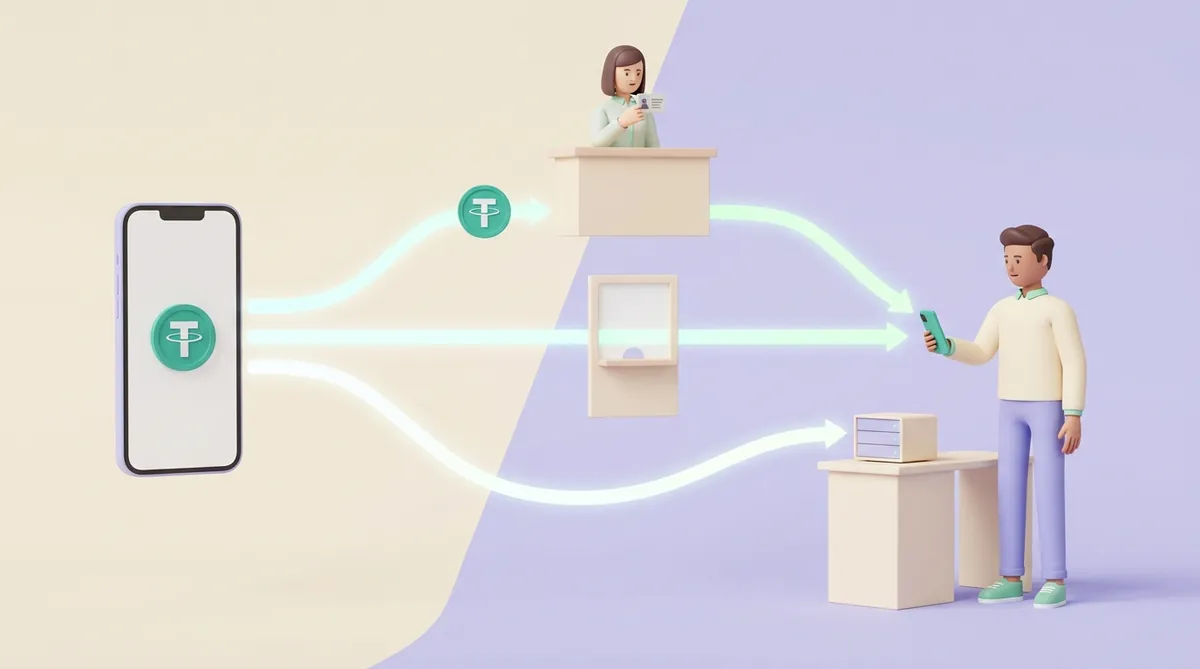
The catch with the last two kinds is what they hand back to you. Without a balance in the middle, the work a processor would do with that balance becomes yours:
Running your own server also adds updates, backups and uptime to the list, so before going that way, weigh whether to self-host a crypto payment gateway or plug in a hosted one.
The law aims at whoever handles other people's money, and a gateway with a balance does exactly that. Two examples show the pattern:
So a gateway that counts as a crypto-asset service provider in the EU, or as a money transmitter in the US, has to verify its customers, whatever its landing page says. Outside those rules, a gateway sets its own terms. A hosted gateway can, for example, ask a merchant who takes only crypto for documents only when a transaction is flagged as suspicious, and hold that transaction until the merchant verifies.
Where a gateway asks later rather than at sign-up, the request can follow any of these triggers:
Here is how that plays out. A designer sells templates through a no-documents account and takes $6,000 in a busy month. One incoming payment gets flagged, and before the next withdrawal the service asks for ID and proof of address. If the designer has them, it is a delay; if not, the balance stays where it is.

The safer route is to know the requirements before the money arrives. They are spelled out in what a crypto merchant account is and what it takes to get one.
A landing page that says "no KYC" doesn't tell you when the check arrives. These four questions do, and it is worth getting the answers in writing:
If what you want from "no KYC" is to start today without a stack of company papers, a quick check at the start does that job, and you learn what the gateway needs from you on day one rather than at your first big withdrawal.
CryptumPay checks the identity of every merchant, without exception, and no withdrawal can be made until that check is passed. Sign-up runs through registration, verification and a review of the project, usually within one business day.
What CryptumPay may not need is the company check. An identity check may be enough, without a package of company documents.
The review needs a website that shows what you do or sell. CryptumPay uses it to look at the project, not to integrate with it: a merchant who only sends payment links doesn't have to add the widget or the API to the site.
You don't have to wait for the review to bill a client. CryptumPay lets a merchant issue an invoice and accept a payment right after signing up, while the check is still running. That payment is credited to the balance once the review is done, and until then its status shows it is waiting to be credited.
CryptumPay also holds suspicious funds before they are credited to the balance. A payment from a flagged wallet is caught on the way in, not after it has landed next to the rest of your money.
No. Merchant KYC is a check on you, the seller, and it doesn't change what your buyer is or isn't asked.
A crypto payment is also open to anyone who looks. The amount, the time and both wallet addresses stay on a public blockchain for good, whichever gateway you use.
What your buyer does avoid is handing a card number to your shop. Meanwhile, a gateway that screens incoming payments checks where the buyer's coins came from, and that screening is explained in how a wallet's crypto risk score is worked out in an AML check.
Whether anyone asks for your documents comes down to where your money sits:
What a merchant in a hurry needs is a quick, light check they can pass early, and a clear answer to when and what the gateway will ask.
Self-hosted software is free to download, and BTCPay Server charges no processing fees of its own. You still pay for the server, the network fee on each transfer and the hours you spend keeping it running. With a hosted gateway, a free sign-up is not a free service, so check the fee per payment and who pays the network fee.
A card payment can't be settled without a bank or a licensed payment company. In the EU and the US, as of October 2026, those are exactly the firms that anti-money-laundering rules oblige to know their customers. So when a crypto gateway offers card payments with no KYC, a regulated partner somewhere in the chain checks someone: you, the buyer at the step where the card buys crypto, or both.
In the EU and the US, as of October 2026, anti-money-laundering duties fall on listed kinds of business, such as banks, payment and crypto firms, casinos and dealers in certain high-value goods. They are tied to what a business does, not to the fact that it accepts crypto. Whether your business is on that list depends on what you sell and where you're registered, so check your own country's list before you assume either way.
This article is general information, not legal advice.
Create an account and connect the checkout yourself, or talk to sales and we will plan the integration with you.