

October 5, 2026
What is a crypto payment gateway, and how does a business start taking payments through one?
Read article

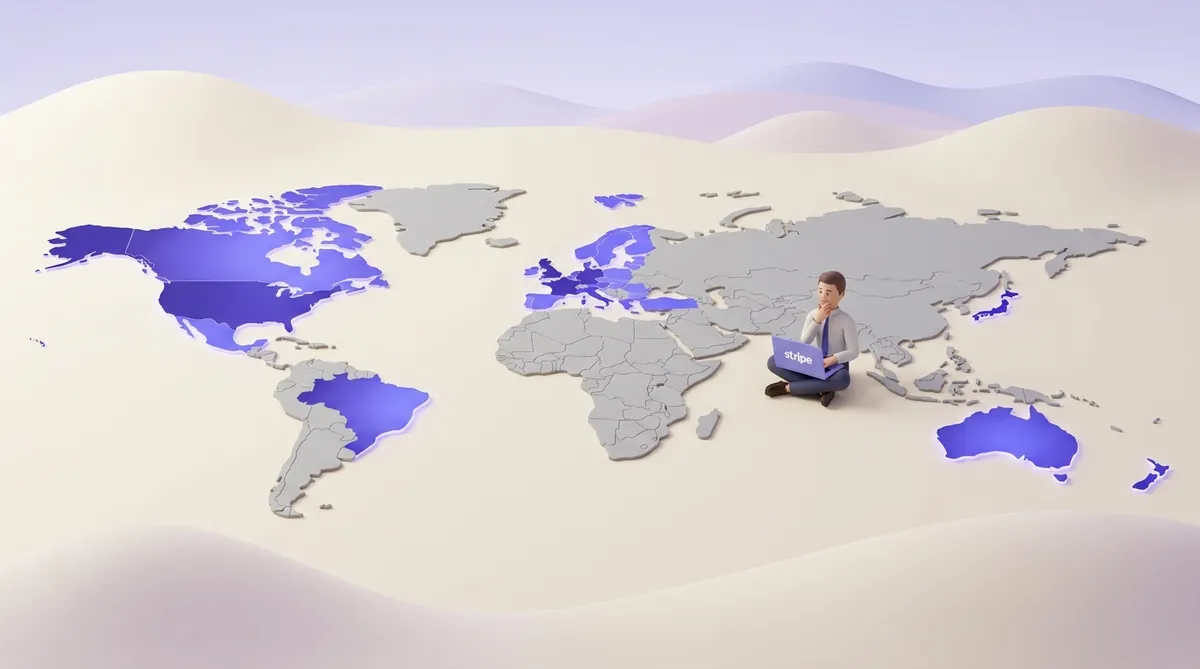
If Stripe is not available in your country, the reason is its sign-up rules: Stripe opens accounts only for businesses based in the countries on its list, and the people behind the account have to live there too. No VPN or borrowed address changes that, but four other routes still get the money to you, from accepting crypto through a payment link to a US company of your own.
The routes differ mainly in how much paperwork each one takes and what your customers can pay with. Below is how to tell which one fits you.
Stripe works in around fifty countries and regions: its global availability page listed 51 in October 2026. A few of them sit on that list on special terms:
If your country isn't on the list at all, Stripe doesn't open accounts there yet. What it offers instead:
That last point makes it fair to ask whether you can accept crypto payments through Stripe at all, and what to do if you can't switch them on.
Your passport is not what decides things: a government ID can come from any country. To open an account in a supported country, Stripe asks for:
Forums and paid "account services" offer ways around the list. Each of them runs into the checks above:
The real risk here is not a refusal. When Stripe closes an account, money already in it can be held for a while to cover refunds and chargebacks (cases where a customer's bank pulls a card payment back). For a small seller, that means a balance you have earned and cannot reach.
The first one doesn't depend on any card company's country list at all.
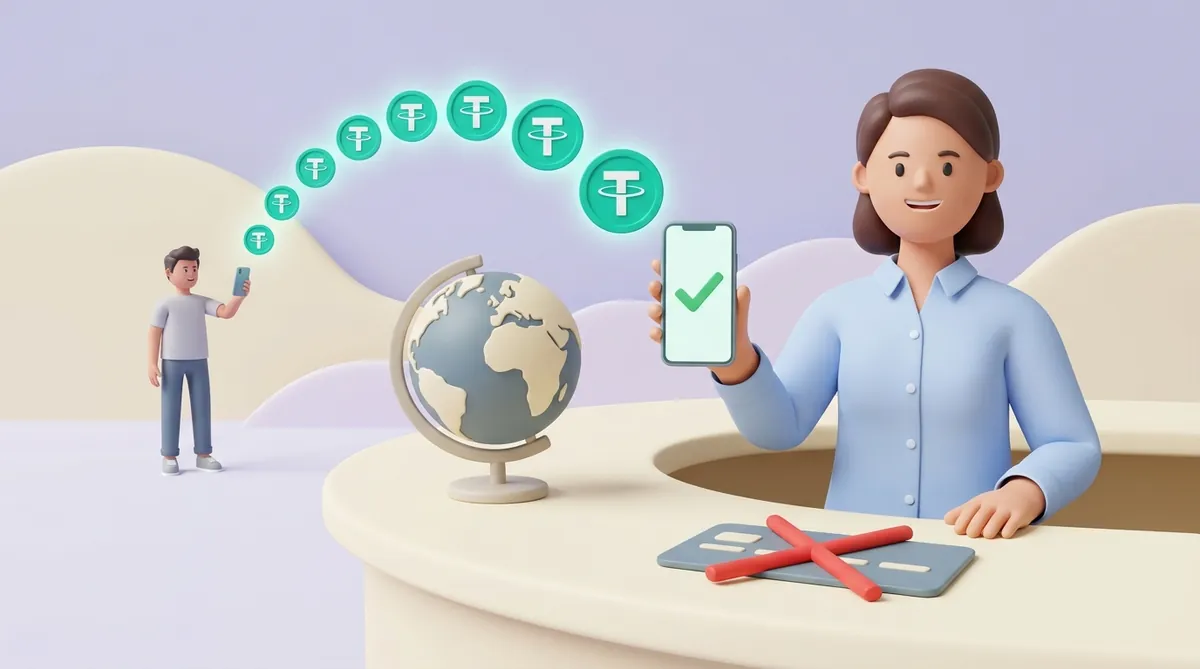
A crypto payment link is a web page with the amount and the payment details. You send it to the customer, and they pay from their crypto wallet. The money goes from wallet to wallet without a card network, so no card processor has to accept your country. The crypto payment service still checks who you are, so read its country rules too.
The cost of this route sits with the customer: they need to hold crypto, usually USDT, the most widely used dollar stablecoin. It suits clients who already have it, such as companies paying contractors abroad or audiences that buy with crypto anyway. It doesn't suit a shop whose customers only ever pay by card. Rules on accepting crypto and taxing the income also differ by country, so check yours before you switch it on.
CryptumPay works this way and gives you three ways to take the payment:
In every case the customer needs no account: they open the link and pay straight from their crypto wallet. Payment links and QR invoices let a seller accept USDT without building a full integration.
Whatever coin the customer pays in, CryptumPay converts it and settles the money to you in USDT. You can withdraw at any time, and there is no minimum withdrawal amount. The fee is 1% per successful payment, down to 0.5% at higher volumes.

Your country may well have local payment providers or banks that accept cards online even without Stripe. Such providers know local rules and pay out straight to a local bank account. The question is whether they work for customers outside your country.
Before signing, ask the provider three things:
If the answers show that money from foreign customers gets stuck somewhere along the way, look at the other ways to accept international payments when customers are abroad and the money won't come through.
Three kinds of service take the payment under their own account and pay you your share:
The platform holds the payment account and you are its supplier, so you never need Stripe yourself. Before you sign up, check two things:
If you sell software or subscriptions, a merchant of record is only one part of choosing an international payments stack for a SaaS business.
This is the route Stripe itself points people to: Stripe Atlas sets up a US company for founders who live outside the countries on Stripe's list. Stripe's own rules leave some people out, though:
If none of that applies to you, you choose a Delaware LLC or a C corporation, and incorporation takes about two business days. Atlas also gets the company's US tax ID (EIN), and after incorporation you can open an account and start taking Stripe payments.
The price is $500 once. It covers the government filing fees and the first year of a registered agent, a firm that receives official mail for your company in Delaware. From the second year, the registered agent costs $100 a year.
The bigger cost is what a US company asks of you every year:
If forming a company is exactly what you want to avoid, it helps to know whether you can get a payment gateway without registering a company.
The answer depends on what you sell and who pays:
Stripe's country list is about where you and your business are, and no shortcut moves you onto it without putting your balance at risk. Pick a route by how much paperwork you're ready for and how your customers want to pay.
Stripe doesn't publish dates for new countries: its availability page only says more are to come. You can ask Stripe to notify you when your country is added. Until then, it's safer to set up one of the routes above than to wait for a launch that has no date.
Yes, if you live in a supported country. There Stripe lets you sign up as an individual or sole proprietor, without registering a company. What blocks people in other countries is where they and their bank are, not the lack of a business.
Living outside the US is not the problem in itself: Stripe works in around fifty countries, every EU country among them. If your country is on the list, you can sign up there directly, with no US company. If it isn't, the alternatives are the four routes above, and what you sell decides which one fits.
This article is general information, not legal or tax advice.
Create an account and connect the checkout yourself, or talk to sales and we will plan the integration with you.