


August 9, 2026
Crypto Payment Gateway: What It Really Costs and How to Connect It
Read article
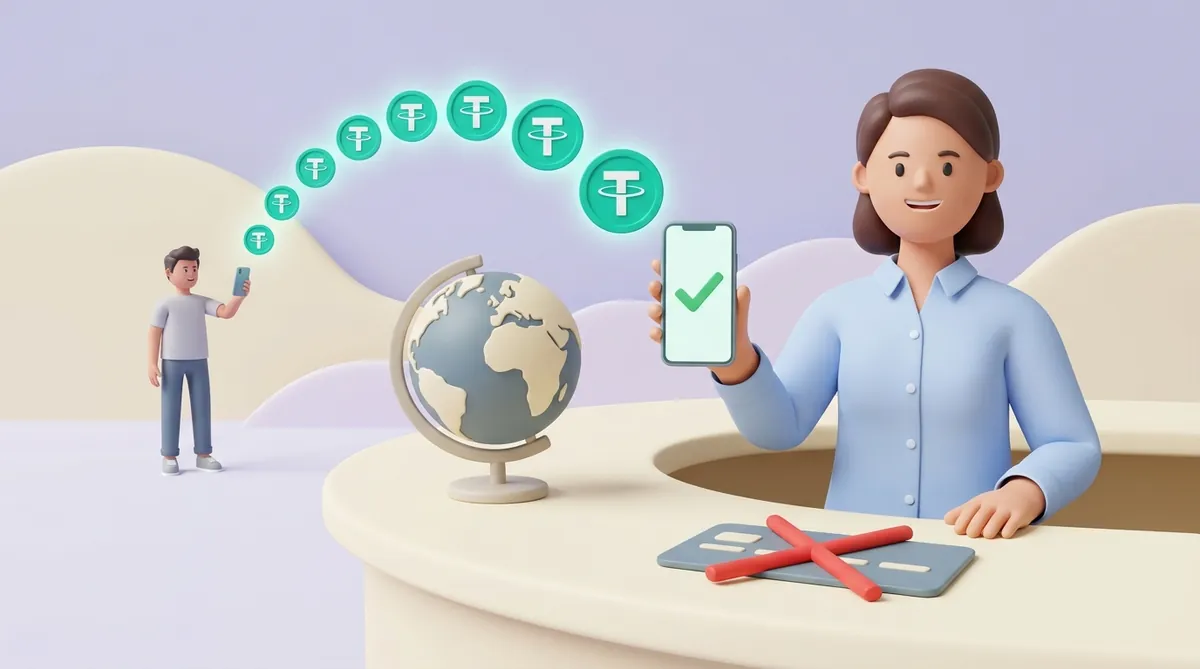
Five routes to accept international payments are still open to you, and not one of them depends on your bank learning to like foreign cards. Two of them still take cards, just not through your bank; the other three skip card rails entirely, and the last of those is a stablecoin paid straight into a wallet you control.
Which one fits comes down to three questions:
Below is what each route costs, how long it takes and what paperwork it drags behind it — and then, in detail, how taking a crypto payment actually works if that is the route you choose.
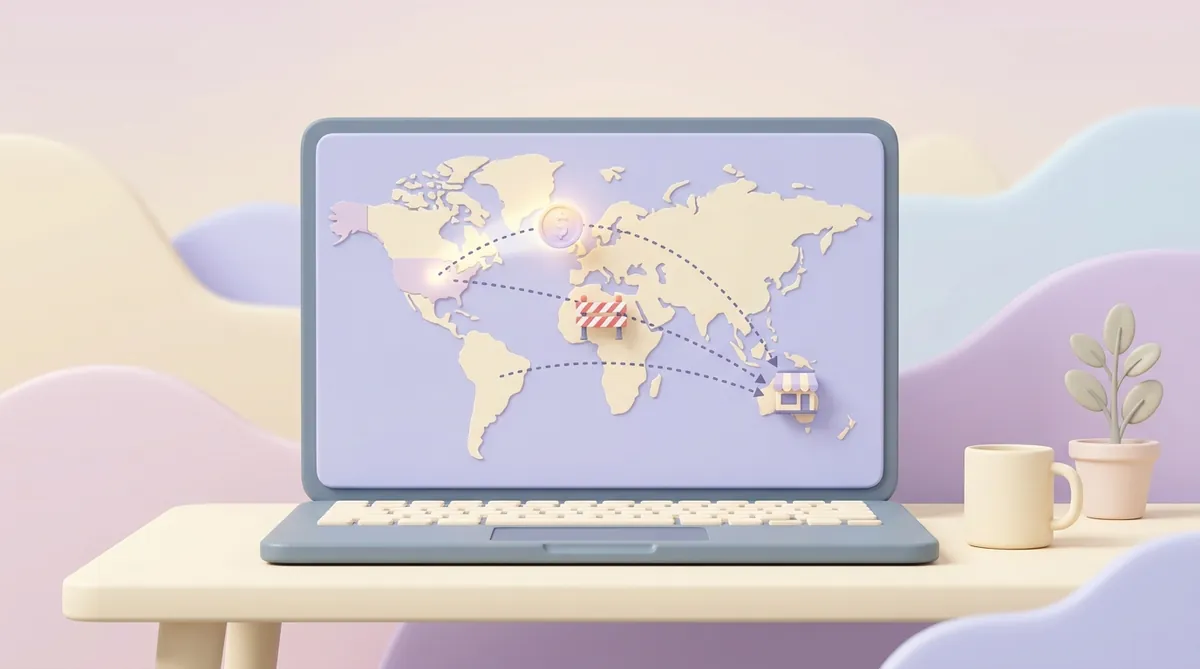
There are five, and they are genuinely different things — not five brands of the same product:
One sales model narrows that list before you even start comparing. If you bill monthly, a subscription needs a card stored on file, and crypto does not do "charge them again on the 3rd" by itself — recurring billing is the one job where card acquiring is genuinely hard to replace. If that is your model, start from the payment stack a software business with customers abroad actually needs.
"Not available" covers different situations, and the fix differs for each. Find yours below before you change anything.
Check the provider's own page and nothing else, because the list moves. In September 2026 Stripe's availability page showed:
Pakistan and Türkiye were not on it.
This one catches people out most often, because on paper the service "works". PayPal's own help pages describe accounts with send-only capability: the holder can pay other people but cannot receive payments. An account like that is fine for buying software and useless for selling it.
This is the quietest of them. Your checkout is live, your domestic customers pay, and then a card issued in Germany or Canada gets declined at the last step. That usually means your acquirer is not set up for cross-border card traffic or is screening it hard — a problem with your bank, not with the internet.
Before you rebuild anything, ask your bank one direct question: "do you accept cards issued outside the country, and at what approval rate?"
The practical move is the same: stop trying to get one particular brand to work, and pick a route from the list above that does not need it. Most businesses in this position end up running two routes side by side, one on cards and one off them.
Sometimes it is the honest answer, and it is a much bigger commitment than it looks. A company in another country is a real company, and it comes with obligations of its own:
It also has to be true. Payment providers ask where the business operates, not just where it is registered, and an account opened on a description that does not match reality is the kind that gets frozen with a balance in it — after the goods have shipped. If your operations, your staff and your customers are elsewhere, talk to an accountant who works in both countries before you spend anything on incorporation.
The cheaper experiment is to try the routes that take you as you are:
If revenue from one market then grows large enough to justify a company there, you will be making that decision with numbers instead of hope.
If what you sell is your own time rather than a company's product — you invoice a handful of clients a month and the money lands in an account with your own name on it — incorporation abroad is heavier still relative to what you earn, and the routes worth trying are the personal-scale ones, closer to the ways a freelancer gets paid in crypto by clients overseas.
Cross-border money leaks in four separate places, and comparing providers on the headline percentage alone is how businesses end up surprised:
Crypto is priced differently rather than simply cheaper, and the difference matters for small payments. The network fee is a flat amount for moving the coins — roughly a dollar or two on the networks most people use for USDT — and it does not grow with the size of the invoice. On top of that sits your provider's percentage. There is no cross-border surcharge, because the network has no idea which country either party is in.
CryptumPay charges 1% per successful payment, down to 0.5% at higher volumes, and lets a business pass that fee on to the customer instead of absorbing it. Whichever provider you compare it against, ask for the same four-layer breakdown — headline rate, cross-border, conversion, payout — and insist on the exchange rate they will actually use.
Each kind of payment runs on its own clock, and the difference is bigger than the fees:

A decline on a foreign card usually starts in one of these places, and you will rarely be told which — the response code is deliberately vague:
Chargebacks are the sharper risk. A cardholder can dispute a payment months after it was made, and the money is pulled back from you while you assemble the evidence. Enough of them and the provider raises your reserve or closes the account, which is how a business that was "finally accepting cards" loses the ability again.
A crypto payment cannot be charged back, and that cuts both ways. You keep the money once it confirms, so no dispute can drain an account you have already spent from. But the buyer has no card network to appeal to either, which means your refund policy, your delivery proof and your responsiveness are doing the work the card network used to do — and a customer who does not trust you yet will simply pay by card somewhere else.
Yes, and the mechanics are simpler than most people expect.
A crypto payment goes through four steps, and none of them involves a card network:
There is no application to an acquiring bank anywhere in that chain, which is the part that was blocking you.
Geography does not disappear; it changes shape:
Businesses take crypto in one of three ways, and which one you need depends on whether you have a website at all:
Each costs a different amount of developer time, and it is worth seeing what every route for adding crypto acceptance to a website involves before you pick one.
CryptumPay offers all three ways:
Whichever way you pick, the customer's side stays the same:
If you sell over chat, by email or over the phone, the link route is the whole answer on its own, and it is the fastest thing on this page to test. A design studio that agrees a project over email creates an invoice for the agreed amount, pastes the link into the reply, and sees it marked paid when the money lands; the client opens it in a browser like any other payment page.
Nothing has to be plugged into a site for that, and no developer touches anything — though with CryptumPay a site or page showing what you sell is still looked at during project review, and live payments are switched on after that review. That is the shape of invoicing in crypto with a payment link or a QR code.
Customers usually go wrong in two places, and both are worth knowing about before your first invoice:
For an online store the button is usually the right starting point, because the customer never leaves the checkout they were already in, and a developer only has to place one element on the page. Before you brief anyone, though, read what a checkout widget does that an API integration does not.
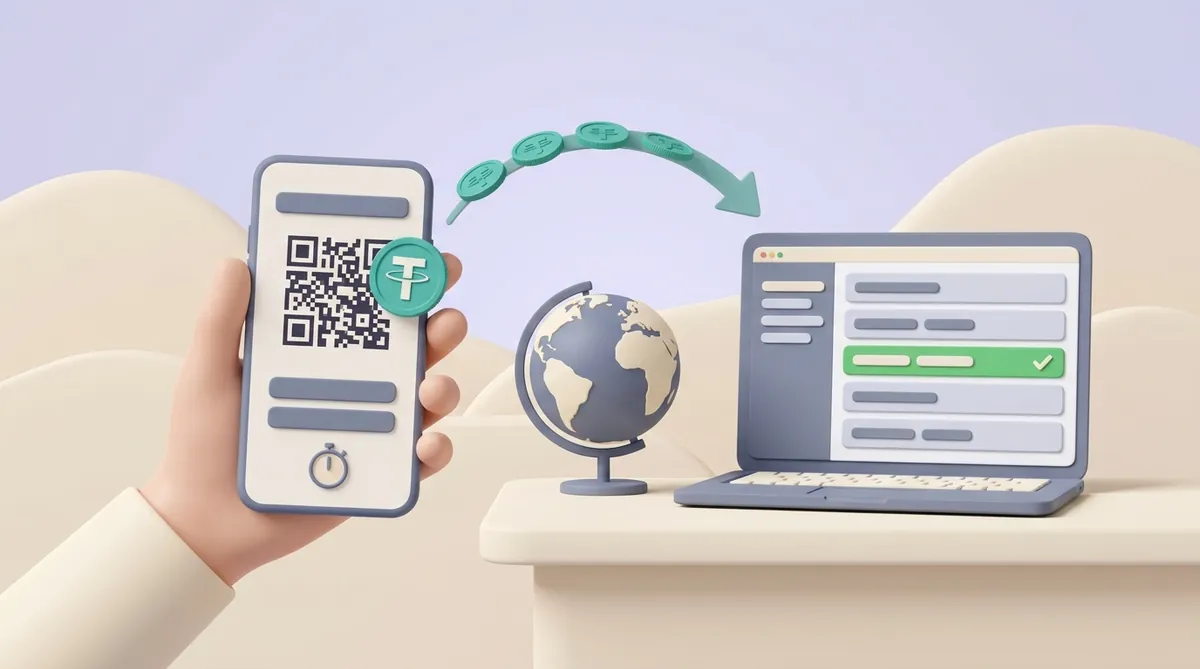
This section is the one to read slowly, because the answers are local and they change.
It is a national question, and some countries say no. In Türkiye, the central bank published a regulation on the disuse of crypto assets in payments on 16 April 2021, in force since 30 April 2021, which prohibits using crypto assets to pay for goods and services. Holding or trading is treated separately from paying — and since rules like this are amended, a Turkish business should confirm the current text with a local lawyer before taking a single crypto payment.
It matters as much as where you are. In the European Union, crypto services fall under the Markets in Crypto-Assets Regulation, Regulation (EU) 2023/1114; its authorisation requirements for crypto-asset service providers have applied since December 2024, with national transition arrangements for existing firms running no later than 1 July 2026. If you sell to EU customers or use an EU-based provider, ask which authorisation it holds.
We cannot answer this in general and would be wrong to try: the answer depends on where your business is registered and how it keeps its books. Take these questions to an accountant licensed there:
These are the questions people forget to ask, and they matter most for a payment that never touches a bank. Put them to the same accountant:
If your usual route has closed, do not spend months trying to reopen it. Work out what exactly closed on you, then pick two routes from the five:
Choose between them on things you can check today:
For card payments, no — a card processor settles into a bank account somewhere, and opening one is part of the application. For crypto, yes in the narrow sense: payments settle to a wallet, so you can receive money without a bank. You will still need a bank or an exchange at the moment you convert that balance into local currency and pay salaries with it.
Treat the list as final rather than as a starting position for negotiation, and look sideways instead:
Registering a company abroad is a real option but a heavy one, and it has tax consequences at home.
The list changes often enough that any figure printed in an article is unreliable, so check PayPal's own country page for yours. The distinction that matters is not "supported or not" but what the account can do: PayPal describes accounts with send-only capability, which can pay out but cannot receive payments. Verify that receiving is allowed in your country before you build a checkout around it.
What US providers ask for is a business tax identification number rather than your personal one. The IRS does not accept online EIN applications from applicants whose principal place of business is outside the United States — those go by phone, fax or mail. Whether a given provider will then onboard a non-resident business is its own decision, and an accountant who works with your country is the person to ask before you pay any incorporation fee.
It depends on how the customer paid:
The legal and tax information in this article is general, stated as of September 2026 for the jurisdictions named, and is not legal or tax advice.
Create an account and connect the checkout yourself, or talk to sales and we will plan the integration with you.