


June 9, 2026
CEX vs DEX: How to Choose Where to Buy, Swap, and Store Crypto
Read article
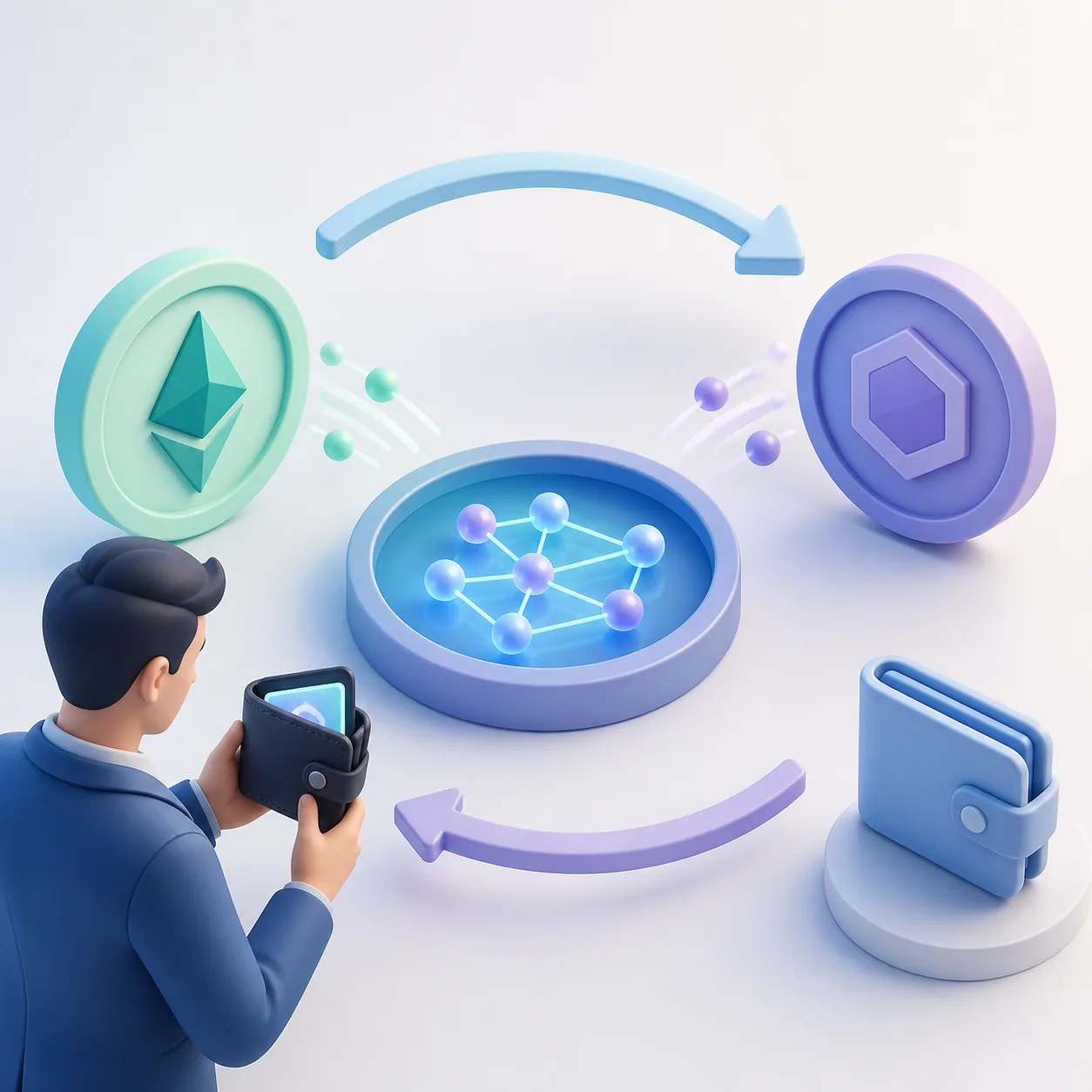
A crypto swap is a way to exchange one cryptocurrency for another without first converting it into fiat money. A user might swap ETH for USDT, USDC for SOL, or one network token for another token inside a wallet, DEX, or exchange interface.
At first glance, a swap looks simple: choose the asset you have, choose the asset you want, confirm the transaction, and wait for the result. Under the surface, several things happen at once. The swap depends on liquidity, network fees, price movement, token approvals, and the rules of the platform or protocol handling the trade.
This is why swaps are useful but not risk-free. They help users move between assets quickly, but they can also create mistakes: wrong network, high slippage, fake tokens, insufficient gas, or a transaction that fails after the user has already spent a network fee.
For businesses, swaps matter because customers often use them before paying. Someone may buy crypto on an exchange, move it to a wallet, swap into USDT, and only then complete a checkout. If a company accepts crypto, understanding this journey helps support and operations teams explain failed or delayed payments more clearly.
A crypto swap is an exchange between two digital assets. Instead of selling crypto for dollars or euros and then buying another coin, the user moves directly from one crypto asset into another.
There are several common swap scenarios:
The word “swap” is often used in Web3 because many swaps do not rely on a traditional order book. On a DEX, the trade may be executed against a liquidity pool. In a wallet, the interface may route the swap through one or several liquidity sources. On a centralized exchange, the same action may feel like a simple conversion between balances.
If you are still comparing where swaps happen, it helps to understand the difference between CEX and DEX platforms. A CEX handles balances inside a platform account. A DEX usually requires a self-custody wallet and on-chain transaction signing.
In a typical wallet or DEX swap, the user starts with a token in a self-custody wallet. The interface shows the token to sell, the token to receive, the expected amount, the network fee, and sometimes price impact or slippage settings.
The user then approves the transaction in the wallet. Depending on the token and protocol, there may be a separate token approval before the swap. This approval gives a smart contract permission to spend a specific token from the user’s wallet. After that, the actual swap transaction can be submitted to the network.
A simplified flow looks like this:
This process can feel instant in the interface, but it still depends on the blockchain. If the network is congested, the transaction may stay pending. If the price moves outside the accepted range, the swap may fail. If the user lacks enough native token for gas, the transaction may not go through at all.
That is why wallet-based swaps require more attention than a simple balance conversion on an exchange. A wallet gives the user control, but it also pushes more responsibility onto the user.
A swap only works if there is liquidity for the pair the user wants to trade. In traditional markets, liquidity often comes from buyers and sellers placing orders. On many DEXs, liquidity comes from pools.
A liquidity pool is a smart contract that holds two or more assets. Liquidity providers deposit assets into the pool. Traders swap against that pool, and liquidity providers receive fees for supplying capital.
For example, if a pool contains ETH and USDT, a user can trade ETH for USDT through that pool. The pool’s formula adjusts the relative price as assets move in and out. The larger the trade compared with available liquidity, the more the price may move during execution.
This is why swaps for popular assets usually feel smoother. A deep ETH/USDT or USDC/ETH pool can often support larger trades with less price impact. A small token with thin liquidity can produce a much worse result, even if the interface technically allows the swap.
For everyday users, the practical lesson is simple: the quote shown before confirmation is not just about “the market price.” It also reflects available liquidity, routing, fees, and the size of the trade.
Two terms appear often in swaps: price impact and slippage. They are related, but not identical.
Price impact is the effect your own trade has on the pool price. If you swap a large amount in a pool with limited liquidity, your transaction changes the asset ratio in the pool and can move the final execution price.
Slippage is the difference between the expected price and the actual execution price while the transaction is pending. Crypto markets move quickly, and on-chain transactions are not always mined immediately. If the price changes before your transaction confirms, the final result may differ from the quote you saw.
Most swap interfaces let users set slippage tolerance. If the final execution would be worse than the accepted range, the swap should fail instead of completing at a much worse price. This protects the user from some bad outcomes, but it does not make swaps risk-free.
Low slippage tolerance can cause more failed swaps during volatile periods. High slippage tolerance can make the user more exposed to poor execution or hostile conditions. There is no universal setting that fits every asset and network.
For businesses, this matters because users may arrive at checkout after already dealing with slippage and network fees. If the customer swaps into the payment asset but receives less than expected, they may send the wrong amount. That can turn into a support case, refund request, or delayed order.
Most on-chain swaps require a network fee. This fee is paid in the native asset of the blockchain. On Ethereum, that usually means ETH. On BNB Smart Chain, it means BNB. On Polygon, it means POL/MATIC depending on the network context. On TRON, fee mechanics are different, but users still need to account for network costs.
A common beginner mistake is holding the token they want to swap, but not holding the native token needed to pay gas. For example, a wallet may contain USDT on Ethereum but no ETH. In that case, the user may not be able to approve or execute the swap.
Network fees also affect the economics of small swaps. If the expected swap is worth $20 but the network fee is high, the transaction may make no sense. On cheaper networks, the same operation may be more practical.
Businesses that accept crypto see a similar issue in payments. If customers need to prepare funds before paying, gas can become part of the payment experience. A useful starting point is understanding network fees and gas in crypto payments, because fees influence both swaps and checkout completion.
Swaps often involve token approvals. An approval allows a smart contract to spend a token from the user’s wallet. This is normal in many DeFi workflows, but it is also a common source of risk.
Users should understand what they are approving. A malicious site may ask for broad permission. A fake token may appear to have value but be impossible to sell. A phishing page may imitate a known DEX or wallet interface. Once a user signs a harmful approval, their wallet may be exposed.
Before swapping, users should check:
This is especially important when swapping small or unfamiliar tokens. The risk is not only price volatility. The token itself may be fake, illiquid, restricted, or designed to trap buyers.
A general wallet guide can help users understand the self-custody layer before they start signing approvals. For broader wallet context, see this guide to choosing a crypto wallet.
Not every swap is a DEX swap. Many centralized exchanges offer a simple “convert” or “swap” feature. The user selects one balance, chooses another asset, and confirms the conversion inside the exchange account.
This is often easier for beginners. The user does not need to sign a smart contract transaction or manage token approvals. The exchange handles internal execution and shows the resulting balance.
The trade-off is that the user is operating inside a custodial platform. The exchange controls the account infrastructure, rules, supported assets, fees, and withdrawal conditions. The price may include spread or conversion fees, and the user may need KYC depending on the platform and region.
For many users, a centralized swap is enough. For Web3-native users, a DEX swap may be more flexible. The right choice depends on whether the user values convenience, self-custody, access to specific tokens, or direct on-chain control.
Using a centralized exchange can make swapping easier, but choosing the right provider is not always straightforward. Many users have probably found themselves in a situation where even a simple swap turns out to be less predictable than expected. At first glance, several providers may appear to offer similar conditions, only for the transaction to get stuck, KYC to be requested unexpectedly, or the final amount to be noticeably lower than initially expected.
Trying to avoid these surprises means looking beyond the exchange rate. What fees does the provider charge? Which assets and networks does it support? How long is the transaction expected to take? Will KYC be required? What do other users say about the service? This is where another challenge emerges: the crypto exchange market is fragmented, with this information spread across different platforms. As a result, comparing offers can quickly become a task of its own.
Crypto exchange aggregators help address this problem by bringing offers and information from different providers together in one place. Swapzone, for example, aggregates offers from multiple crypto exchange providers, allowing users to compare rates, fees, supported assets, estimated completion times, and other conditions before completing a crypto swap.
The comparison goes beyond the exchange rate. Swapzone also provides provider ratings and reviews, giving users additional context when choosing a service. For example, users can check Changelly reviews alongside other provider information before selecting an offer. This makes it easier to evaluate the available options in one place, without switching between multiple exchange websites or relying solely on the quoted rate.
Once they have compared the available offers, users can also complete the exchange directly through the Swapzone interface without having to move between different platforms. This reduces the number of steps involved and makes the overall process of choosing and completing a swap more convenient.
Some swaps happen within one blockchain. Others involve assets on different networks. This is where cross-chain tools and bridges appear.
A normal token swap might exchange two assets on Ethereum. A cross-chain swap or bridge flow may move value from Ethereum to BNB Smart Chain, Polygon, Base, Solana, or another network. This adds complexity: the user now has to care about the source chain, destination chain, bridge mechanism, fees, confirmations, and the form of the asset received.
Cross-chain flows can be useful, but they are not the same as a simple token swap. They may involve wrapped assets, liquidity networks, separate contracts, or third-party infrastructure. They can also introduce additional risk.
For payments, this is one reason businesses should be precise about supported networks. “Send USDT” is not enough. USDT on one network is operationally different from USDT on another network. If users have to bridge or swap before paying, the chance of a mistake increases. A focused guide to choosing the right USDT network can help reduce this confusion.
Most swap mistakes come from speed, unfamiliar interfaces, or misunderstanding the network layer. Users often focus on the token name and ignore details that decide whether the transaction will work.
The most common issues include:
A failed swap and a failed payment are not the same thing, but they can be connected. If a user receives less after a swap than expected, they may underpay an invoice. If they wait too long, the payment window may expire. If they choose the wrong network, the business may not be able to match the payment automatically.
For operations teams, the practical follow-up is to know how to verify the payment itself: TXID, network, amount, status, and confirmations. That workflow is covered in this guide to checking a crypto payment.
A business does not need to operate a swap tool to accept crypto payments. But it should understand that customers may swap before they pay.
This matters for checkout design. If a business supports only one asset or one network, users may need to convert funds first. That adds steps. Each step can produce a support problem: insufficient gas, delayed confirmation, wrong network, wrong amount, or a token that looks similar but is not supported.
A good crypto payment flow reduces the need for guesswork. It should show the supported asset, network, amount, payment status, and expiration logic clearly. It should help the team match payments to orders and handle late payments, underpayments, or refunds without rebuilding the entire investigation manually.
CryptumPay fits this layer as payment infrastructure. It does not replace a CEX, DEX, or wallet. Instead, it helps businesses make the final payment step clearer: invoices, payment status, supported networks, order matching, and operational visibility. That is especially useful when the customer’s journey before checkout includes swaps, withdrawals, and wallet transfers.
A crypto swap is a direct exchange between digital assets. It can happen inside a wallet, on a DEX, through a centralized exchange, or as part of a more complex cross-chain route.
The useful part is flexibility. Swaps let users move between assets without returning to fiat every time. The risky part is execution. Liquidity, slippage, gas, token approvals, fake tokens, and network choice all affect the result.
For users, the best habit is to slow down before signing: check the token, network, expected output, slippage, approval, and gas. For businesses, the lesson is different: assume that users may arrive at checkout after a complicated crypto path, and make the payment step as clear and auditable as possible.
Create an account and connect the checkout yourself, or talk to sales and we will plan the integration with you.