November 15, 2024
What Is Cryptocurrency and How Blockchain Works
Read article

A satoshi is the smallest piece of a bitcoin: one hundred-millionth of a coin, written 0.00000001 BTC. People shorten it to "sat", and "sats" in the plural. It works like cents to a dollar, except that a bitcoin splits into 100 million parts instead of 100, and a satoshi has no fixed price of its own: its value moves with bitcoin.
One bitcoin is 100,000,000 satoshis. To turn a bitcoin amount into sats, move the decimal point eight places to the right; to go back, move it eight places to the left.
The amounts you meet most often look like this:
The satoshi is not a nickname people stuck on top of bitcoin. It is the unit the network itself counts in. Every Bitcoin transaction records its amounts as whole numbers of satoshis, and "0.5 BTC" in a wallet is simply a friendlier way to show 50,000,000 of them.
That is why a bitcoin amount never has more than eight digits after the decimal point: there is nothing smaller to write. The same arithmetic works for the whole supply. Bitcoin's rules cap the number of coins at just under 21 million, which comes to about 2.1 quadrillion satoshis in total.
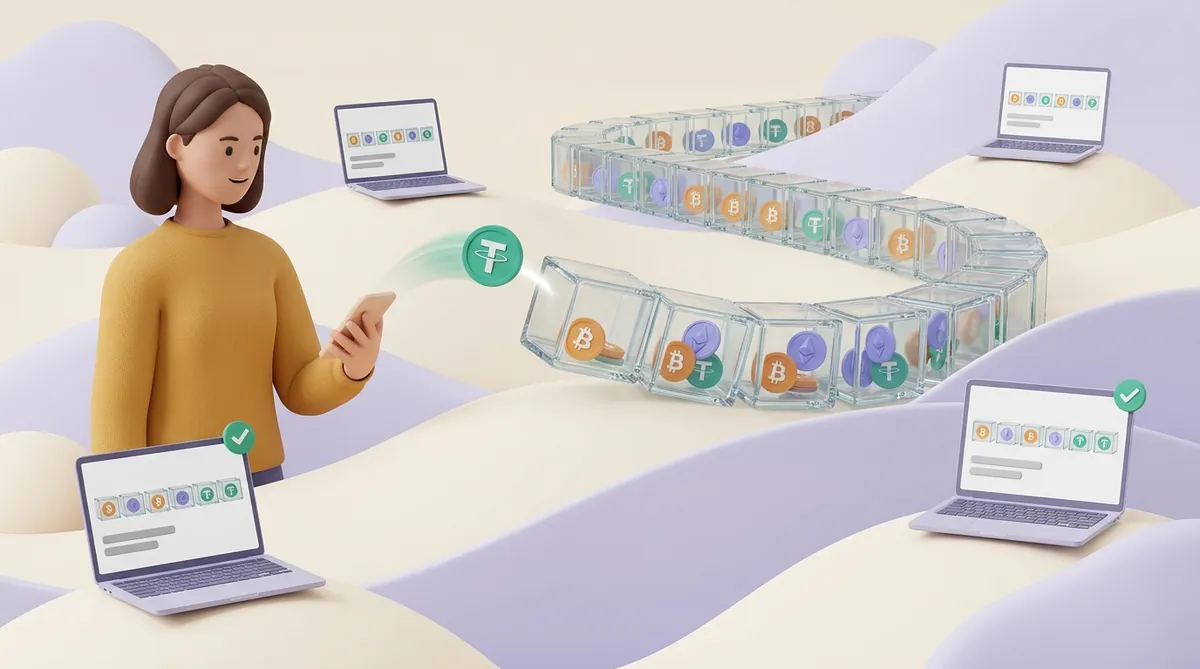
Those balances live in a shared record that thousands of computers keep identical copies of, and no bank holds them. If that idea is still new to you, it helps to start with how cryptocurrency and a blockchain actually work.
A satoshi has no price of its own. It is always one hundred-millionth of whatever one bitcoin costs at that moment, so to find its value you divide the bitcoin price by 100,000,000.
Here is a real day. On the morning of 13 November 2026, Fortune listed one bitcoin at about $69,100. At that price:
The bitcoin price changes every minute, so these figures go stale quickly. The method does not: take today's price from an exchange or a converter and divide it by 100 million. The numbers above are a snapshot of one morning, not a forecast of where a satoshi is heading.
Small bitcoin amounts are hard to read. 0.00025 BTC and 0.0025 BTC look almost the same, yet one is ten times the other. Written as 25,000 sats and 250,000 sats, the difference jumps out, and a missed zero is much harder to make.
So sats turn up wherever amounts are small:
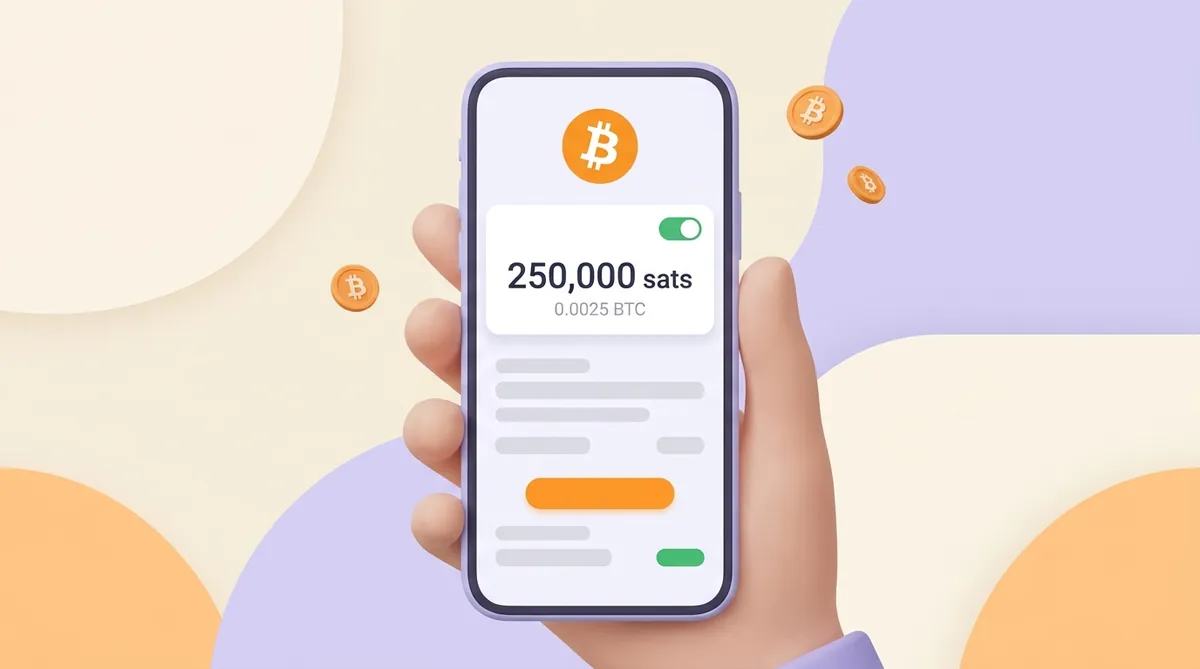
Lightning is a layer on top of Bitcoin built for small, fast payments, which is why its amounts are so small and why sats are its everyday unit. If you have seen a Lightning invoice for 500 sats and wondered why someone would not just send an ordinary transfer, here is when the Lightning Network beats a regular Bitcoin transfer.
One more unit appears now and then: the bit, a proposed name for 100 sats, or one millionth of a bitcoin. You will meet it far less often than sats.
When you send bitcoin, the wallet often shows a fee rate such as "5 sat/vB". It reads as satoshis per virtual byte. It is the price for each unit of space your transaction takes up in a block, not a percentage of the amount you send.
A virtual byte, or vbyte, is how Bitcoin measures the size of a transaction. The size depends on how the transaction is built: mostly on how many earlier payments to your wallet it has to gather to cover the amount, and how many places the money goes. A simple transfer from a modern wallet, gathering one earlier payment and sending to two places (the recipient and your own change), takes about 140 vbytes.
The fee is size times rate. A 140-vbyte transfer at 5 sat/vB pays 140 × 5 = 700 sats, which at the 13 November price was about 48 cents. That fee is the same whether the transfer carries 10,000 sats or 10 bitcoin, because the network charges for space, not for value.
The network fee is only one of the costs that can sit between a sender and the person being paid. Exchanges, apps and payment services may add charges of their own, and it helps to see them side by side: how network fees, gas, gateway fees and checkout costs add up in a crypto payment.
The rate itself is not fixed. Miners, the computers that add transactions to blocks, fill each block with the transactions that pay the most per vbyte. When many people send at once, the rate needed to get in soon goes up; in quiet hours, a low rate is enough. That is the choice behind the "slow" and "fast" options in a wallet: a higher rate buys an earlier confirmation, a lower one saves sats and makes you wait.
Other networks follow the same idea with their own small units. On Ethereum, a transfer is charged for the computing work it needs, and the price of each unit of that work is quoted in gwei, one billionth of an ether. A wallet that shows a price in gwei is doing the same job as one that shows "5 sat/vB": telling you the price per unit, not the total.
So if you hold both coins, you will see two different fee screens built on one logic. For the Ethereum side in detail, here is how gwei turns into your Ethereum fee.
There is no separate coin called a satoshi to buy. On Coinbase or any other exchange, you buy bitcoin, usually by typing an amount in dollars, and the exchange credits you a fraction of a coin. That fraction is counted in sats whether or not the screen shows them: $20 of bitcoin at the 13 November price would have been about 29,000 sats.
Each exchange or app sets its own minimum order and shows it on the buy screen. Its fee matters more on a small purchase, because any flat part of a fee takes a bigger share of a small order. A flat charge of one dollar, for example, would be a fifth of a $5 order and a hundredth of a $100 one.
Searching an exchange for "satoshi" can also turn up a token with that name. It is a separate asset issued by someone else, with its own price, and holding it gives you no bitcoin at all. A familiar name proves nothing about what an asset is, and the place to start is the difference between a token and a coin in crypto.
Sending works in sats as well. Some wallets ask for the amount in BTC, some in sats, and some in dollars, converting at the moment you press the button. Before you confirm, read the amount in the unit the screen shows and count the zeros: 0.001 BTC and 0.0001 BTC differ tenfold, while 100,000 sats and 10,000 sats make the gap plain.
Small sends are where the fee bites. A simple transfer at 5 sat/vB costs about 700 sats however little it carries, so sending 2,000 sats on the main network would spend over a third of that amount on the fee. Payments of a few hundred or a few thousand sats are exactly what Lightning was built for.
A Bitcoin transfer cannot be called back once it is confirmed. That makes the address, the amount and the fee rate worth a second look every time, however small the sum. The whole routine, step by step, is laid out in how to send bitcoin and what to check before you press Send.
A satoshi is one hundred-millionth of a bitcoin, and the Bitcoin network counts every amount in whole satoshis. Its dollar value is the bitcoin price divided by 100 million, so it changes all the time. On a send screen, sats per vbyte is the fee rate: multiply it by the size of your transaction and you get the fee in sats.
The unit is named after Satoshi Nakamoto, the pseudonym of Bitcoin's creator. The name came from the community rather than the creator. In November 2010 a member of the Bitcointalk forum suggested it for a hundredth of a bitcoin, in February 2011 he proposed it for the hundred-millionth instead, and that version stuck.
It is slang for buying bitcoin a little at a time, often a fixed dollar amount every week or month, and watching the number of sats grow. The phrase counts in sats because small regular purchases look tiny in BTC but read as round numbers in sats. It describes a habit, not a plan that guarantees anything: the dollar value of those sats rises and falls with bitcoin.
On the main Bitcoin network, one satoshi is the floor: nothing smaller exists in an ordinary transaction. In practice the floor is higher. Most nodes refuse to pass along a payment so small that spending it later would cost more in fees than it holds, an amount called dust, and exchanges set their own minimum order on top. Only Lightning goes below one sat, with millisatoshis, and only whole sats ever reach the main network.
This article is for general information and is not financial, legal or tax advice.
Create an account and connect the checkout yourself, or talk to sales and we will plan the integration with you.