November 9, 2026
What does a token burn mean in crypto?
Read article

A coin is the built-in money of its own blockchain, the asset that network charges its fees in. A token is an asset created later, by a program running on a blockchain that already exists. So bitcoin and ether are coins, and USDT is a token, even though people call it a stablecoin.
A blockchain is a shared record of who owns what, kept by many computers at once instead of one bank. If you'd like that part first, here is how cryptocurrency and blockchain work.
A blockchain normally has one asset written into its own rules. The network charges fees in it and, on most networks, pays the computers that keep the record. That asset is the coin. Three you are likely to meet:
You will often see the phrase "native token" where this article says coin. The two mean the same thing: the asset built into a blockchain itself. Networks' own documentation often uses it too.
"Native" is the word to listen for, because it ties the asset to the network. "Token" on its own is looser, and people use it for almost anything on a blockchain, coins included.
So someone who calls ether a token isn't necessarily confused. When the exact meaning matters, ask whether the asset is native to the network in front of you.
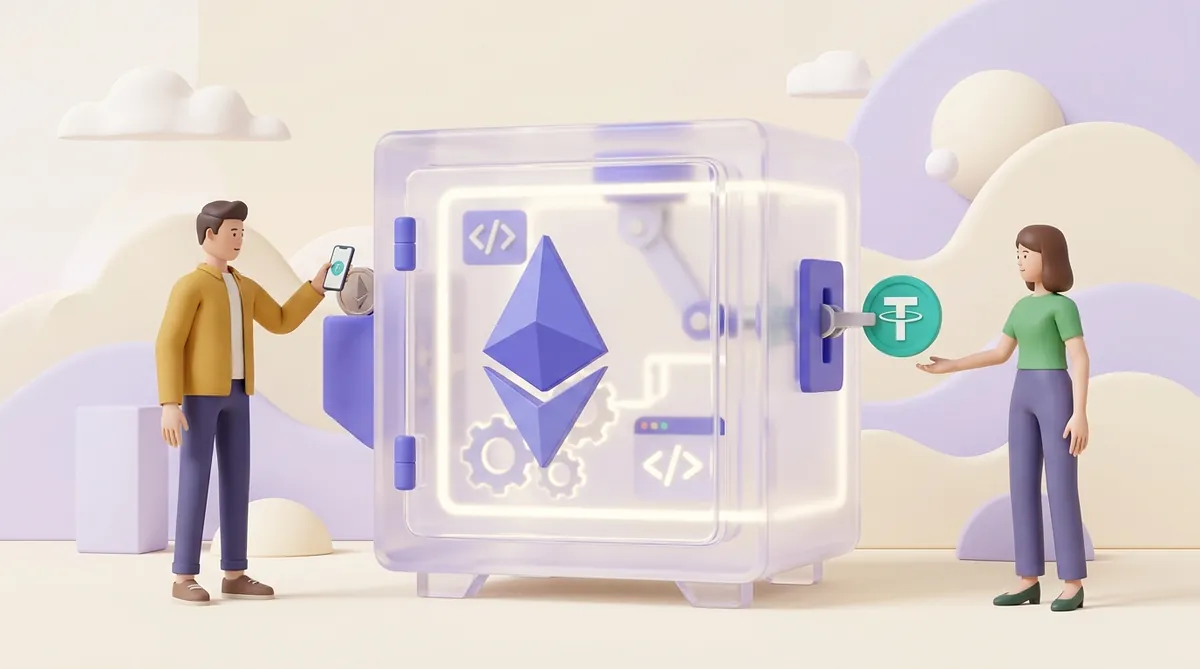
A token is a balance kept by a program on someone else's blockchain. That program is called a smart contract: code stored on the blockchain that runs the same way for everyone. If you're curious about the machinery, here is how smart contracts work and why they matter.
USDT on Ethereum is one such program. Inside it is a long list: this address holds 500 USDT, that one holds 20. When you send USDT, you are asking the program to change two lines of that list.
Think of a coin as a country's own currency and a token as a voucher a company issues there. The voucher can be worth a lot, but taxes are still due in the country's currency.

Tokens can stand for almost anything. A few examples:
Programs that create tokens follow a shared format, so any wallet can read them. The format's name is the label you will see next to the token:
Bitcoin is a coin, and the plainest example there is. It has its own blockchain, there is no program underneath it, and the network charges its fees in bitcoin. People who call it a token are using the word loosely.
One question sorts almost anything else: does the network charge its own fees in this asset? If it does, the asset is that network's coin. If it doesn't, it's a token. USDT is a token on that test, because fees on Ethereum are charged in ETH and fees on Tron in TRX.
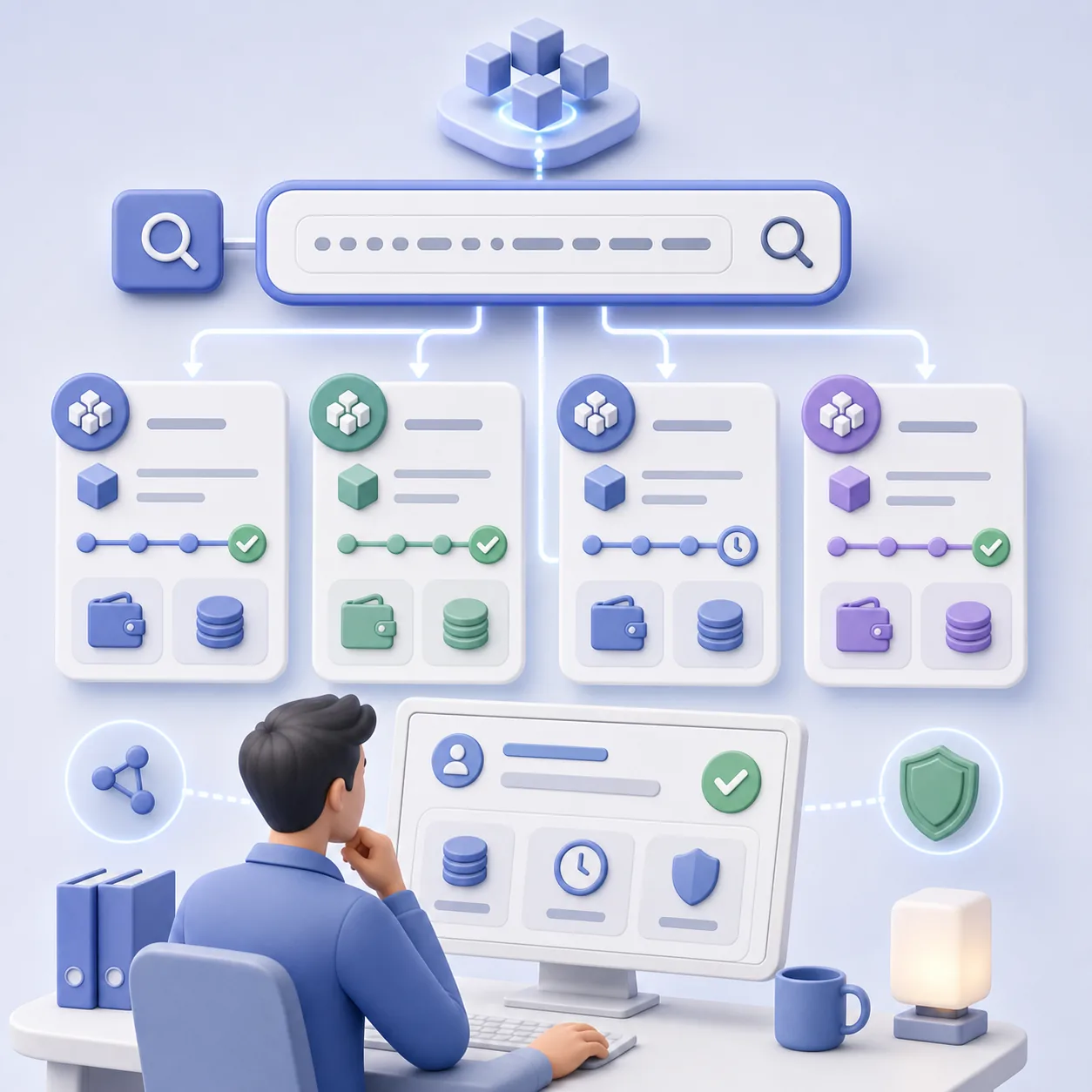
You can also look it up on a blockchain explorer, a public website that shows everything recorded on a network. A token has a page there with a contract address, which is the address of its program, and a coin has none.
A USDT payment on Ethereum shows a value of 0 ETH, with the token amount on a separate line. That surprises people the first time, so here is how to read a crypto transaction in a blockchain explorer.
No. Two explanations come up again and again, and both break on familiar examples:
The fee question above is the test that holds up on both.
Yes, because the answer depends on the network you are looking at. Three cases show how:
A wallet shows coins and tokens side by side, so the difference stays out of sight until you press Send. Then it matters in three ways.
Say you hold 100 USDT on Tron and no TRX. The transfer won't go through, because the network wants its fee in TRX and USDT doesn't count. The way out is to add a little TRX, so the next thing to check is how much TRX you need to send USDT.

Some wallets handle this for you and take payment in the token instead. Behind the scenes, someone still pays the network in its coin.
A coin has no such gap, because its fee comes out of the same balance you are sending from. Sending ETH on Ethereum, for example, needs only ETH.
USDT on Ethereum and USDT on Tron share a name and a price, but they sit in separate programs on separate blockchains. Neither program knows about the other. A balance in one can't pay anyone on the other.
Say a supplier asks for 500 USDT on Ethereum and you send it on BNB Chain instead. The two networks use the same address format, so the transfer goes through, and the supplier's balance on Ethereum doesn't move. Getting the money back may be slow or impossible, depending on who controls that address.
So a token payment always comes with a second question: which network? If you are the one choosing, start with which USDT network suits senders and which suits merchants.
A token's name and symbol are just text its creator types in. Anyone can launch a program called Tether USD with the symbol USDT. Bitcoin has no such weakness, because every computer on its network checks each new coin against the same rules.
The name, the symbol and even the logo tell you nothing. What separates the real USDT from a copy is the contract address, the address of the program itself. On a blockchain explorer it sits at the top of the token's page.
Tether publishes the real address for each network it issues USDT on. If someone pays you in USDT and the amount looks right, compare the contract of what arrived with that address.
USDT also circulates on networks Tether doesn't list, BNB Chain among them. For those, take the contract address shown by a large exchange that supports the network.
Receiving a copy needs no action from you, since a program can assign a balance to any address. It can sit in a wallet and look like real dollars, but no reputable exchange will credit it. Scammers build on exactly this, and it is the idea behind flash USDT and other fake versions of the token.
There is no single official list. Guides usually name utility tokens, security tokens and one more, such as governance or payment tokens. Regulators draw their own lines:
Neither list asks whether the asset has its own blockchain. In Switzerland, FINMA's 2018 payment tokens take in what this article calls coins. In the EU, bitcoin falls into MiCA's third group.
Both schemes sort assets by what they do rather than where they live. So the regulators' categories and the difference between a coin and a token answer separate questions.
If a network charges its fees in an asset, that asset is normally the network's coin. Anything else on that network is a token, whatever its name suggests. Some networks also accept tokens for fees, and on those the coin is the asset built into the network itself.
Before you send a token, check two things:
Neither, strictly speaking: Ethereum is the network, and its coin is ether (ETH). People often say "Ethereum" for both. The assets described as Ethereum tokens are separate things that run on that network. If you want the next level down, here is how the Ethereum network works and what ether does in it.
It isn't a coin in the technical sense. "Stablecoin" describes how the price behaves: it is designed to stay close to one dollar. USDT is a token issued by the company Tether on many networks, among them Ethereum, Tron and Solana.
A coin. XRP is the built-in asset of the XRP Ledger, and the ledger's own documentation keeps the word "token" for every other asset issued there. There is a practical difference too: an account can receive XRP by default, while tokens on that ledger need the account holder's consent first.
Yes, cryptocurrency is the everyday word for both. A coin is a cryptocurrency with a network of its own, and a token is one that runs on somebody else's network. Exchanges list them side by side, so the difference rarely shows until you go to send one.
This article is general information and is not legal advice.
Create an account and connect the checkout yourself, or talk to sales and we will plan the integration with you.