
September 3, 2026
How to Accept Crypto Payments on WooCommerce: Three Paths, One of Them Needs No Plugin
Read article

Publishing a wallet address takes a minute. Building a donation flow that supporters can actually understand is harder.
A donor must choose an amount, identify the correct cryptocurrency and network, cover the network fee, send the payment, and know whether it arrived. The creator or organization then needs to identify the transaction, track the campaign, record its fiat value, and decide how the funds will be stored or converted.
Crypto donations are already a meaningful fundraising channel. In its 2026 Annual Report on Crypto Philanthropy, The Giving Block reported that its platform processed more than $100 million in crypto donations during 2025, up 66% year over year. Stablecoin donations on the platform exceeded $32 million.
The opportunity is real, but a wallet address alone is rarely enough for a reliable donation system.
A crypto donation is a voluntary transfer of cryptocurrency without a fixed purchase price. It can support:
The word “donation” needs some care. A tip to a creator is not automatically a charitable contribution. If the supporter receives a product, premium access, consulting, a subscription, or another defined benefit, the transaction may be closer to a commercial payment.
Projects should describe the purpose clearly. “Support our work” creates a different expectation from “pay $20 to unlock the course.” If money unlocks files, licenses, memberships, or services, the operational model described in crypto payments for digital products may be more appropriate.
The right setup depends on how many donations you expect, whether the amount is fixed, and how much automation you need.
The simplest option is to publish a wallet address and supported network. A creator can place it in a profile, video description, repository, or community page.
This works for occasional support, but creates several problems. Donors must calculate the amount themselves, transactions are not tied to a campaign, and the recipient may struggle to distinguish donations from other transfers.
A shared address also makes reconciliation harder. The recipient sees an on-chain transfer but may not know which person, page, stream, or appeal generated it.
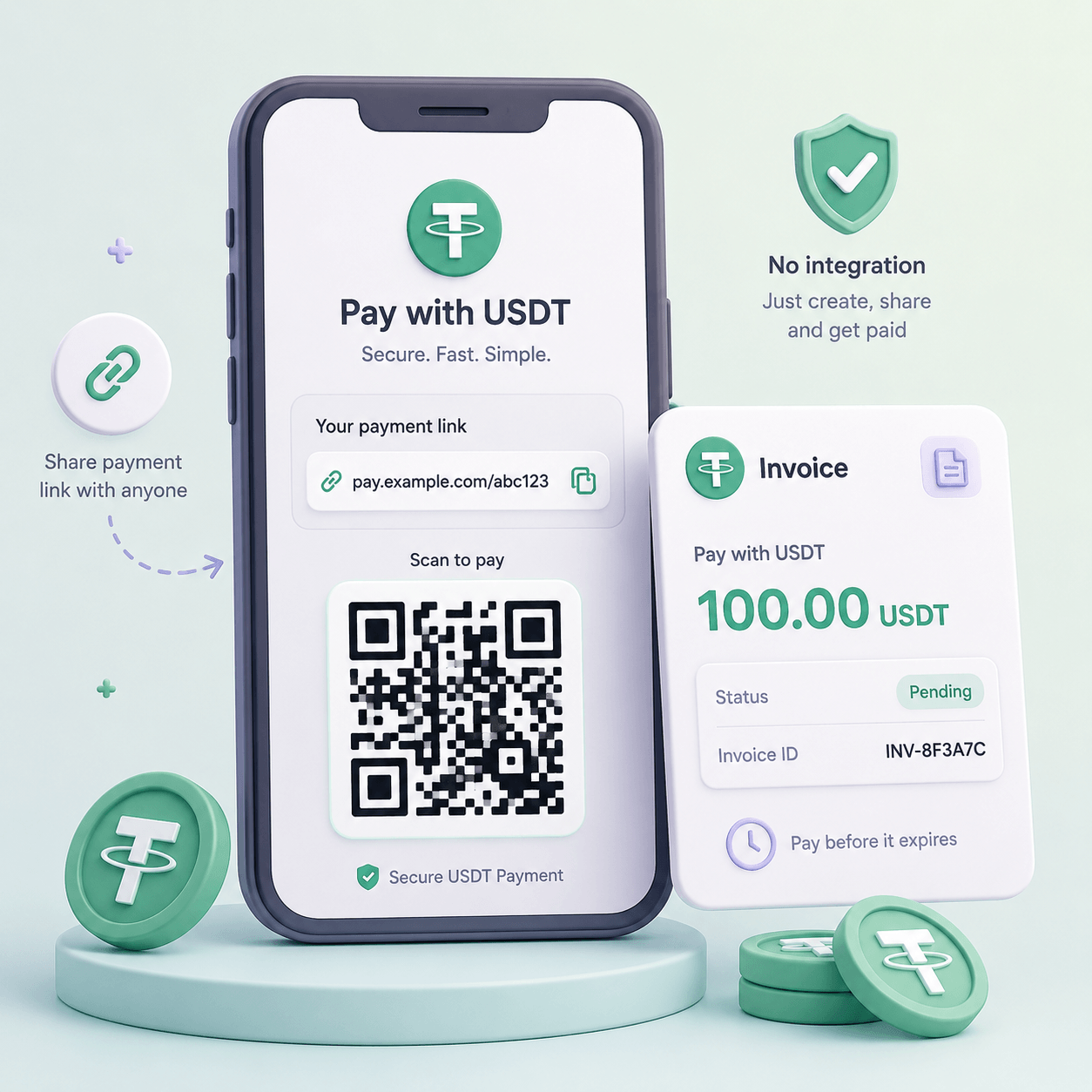
A payment link gives the supporter a dedicated page instead of a raw address. A QR code makes the flow easier on mobile and during live streams.
Links can be placed in:
This approach is explored further in the guide to crypto payment links and QR invoices.
A link is easier to share and update than an address printed across dozens of posts. However, a fixed payment link may still be awkward when every supporter wants to choose a different amount.
A variable-amount widget is a better fit for tips and donations because there is no predetermined price.
The supporter enters the amount they want to give in a selected fiat currency. The widget then calculates the equivalent and creates a crypto invoice in the cryptocurrency and network configured for the campaign.
This removes several points of friction. A supporter can think in familiar terms such as “I want to give 15” rather than manually checking an exchange rate and trying to send the correct decimal amount.
The CryptumPay HTML widget supports this free-amount scenario. A project can let the supporter enter a preferred fiat-denominated amount while the widget generates an invoice in the chosen cryptocurrency and network. This makes it suitable for donations, tips, pay-what-you-want offers, and voluntary community contributions.
The invoice can display the exact crypto amount, address, network, and QR code. That is safer than asking the donor to perform the conversion manually.
An API is useful when the donation must become part of a larger product workflow.
A custom integration can connect the transaction with:
An API requires more development work, but it gives the project control over statuses, notifications, campaign attribution, and financial records.
A practical donation flow can be short without being vague.
First, the supporter chooses or enters an amount in a familiar fiat currency. The project may offer suggested values while still allowing free input.
The widget then creates an invoice using the campaign’s selected cryptocurrency and network. The invoice should clearly show:
The supporter sends the payment from a wallet. The system watches the blockchain and updates the invoice after the required confirmations.
Finally, the page shows a clear result: payment detected, confirming, completed, underpaid, expired, or requiring review.
This is especially useful for donations because the amount varies. The supporter chooses the value, while the payment infrastructure handles conversion and transaction matching.
Accepting every available asset is not always helpful. Each additional network increases the number of instructions, balances, edge cases, and support questions.
Stablecoins can be convenient when the project wants a more predictable fiat value. BTC or ETH may fit communities that already hold those assets. Low-fee networks can work better for small tips because a large network fee can make a $5 donation impractical.
When choosing a route, consider:
A detailed network comparison is available in the guide on how to choose a USDT network.
The donation page should never display an asset without its network. “Send USDT” is incomplete. “Send USDT on the selected supported network” is much safer.
A website gives the project the most control over the experience.
The page can explain what the funds support, offer suggested amounts, show campaign progress, and place the variable-amount widget next to the relevant content. The supporter does not need to leave the project’s environment or copy a wallet address from a social media post.
A strong website flow should also work on mobile. Many donors will open the page on the same phone that contains their wallet, so wallet opening, QR alternatives, and return-to-page behavior matter.
Do not hide the network until the last moment. It should be visible before the supporter confirms the payment.
A live audience has little patience for a complicated payment process. The creator needs one stable destination that can be reused across streams.
A QR code can appear on screen, while the description contains a clickable donation page. The QR should lead to a page or invoice flow, rather than permanently exposing an address that may later change.
The creator should explain which assets and networks are supported. Avoid asking viewers to guess whether a token can be sent through Ethereum, TRON, BNB Smart Chain, Polygon, or another network.
For public alerts, display only information the donor has agreed to share. A blockchain transaction is public, but that does not mean a wallet owner has agreed to have their address shown on a stream.
Telegram projects can place a donation link in a pinned message, channel description, bot menu, or campaign post.
A link-based flow is usually cleaner than asking users to copy addresses from messages. It also reduces the risk of an old or fraudulent address remaining in forwarded posts.
Projects that want deeper automation can connect donation statuses to a bot or backend. For example, the system can send a thank-you message after confirmation or record which campaign generated the transfer.
The broader integration options are covered in the guide to crypto payments in Telegram.
If a payment grants access to a private group, course, or subscription, call it a purchase or membership payment rather than disguising it as a donation.
A public address shows incoming transfers, but it does not create clean financial records.
A donation system should ideally retain:
Unique invoices make it easier to connect an on-chain transaction with the correct campaign. They also help identify underpayments, late transfers, and duplicate payments.
Operations teams can use the same basic verification process described in how to check a crypto payment: verify the TXID, network, asset, amount, address, confirmations, and final status.
Card platforms can charge a stored card every month. Non-custodial crypto wallets generally do not work that way: the supporter usually needs to approve each payment.
Creators can still build recurring support through:
This distinction matters when promising “subscriptions.” Unless the system has a clear authorization model, it is better to describe the flow as repeat donations or renewals. The operational differences are explained in the guide to recurring crypto payments.
Blockchain transfers are visible on public ledgers. A project should not promise that donations are anonymous simply because the donor did not enter a card number.
Wallet addresses, transaction amounts, timing, and fund movements may be visible. Projects should collect only the personal data they need and explain how public donor recognition works.
Larger organizations may also need AML screening, internal review rules, and procedures for high-risk transfers. A high-risk result does not automatically prove criminal activity, but it may require investigation. The mechanics are described in the guide to crypto risk scores and wallet checks.
Tax, accounting, fundraising, KYC, and donor-receipt requirements depend on the jurisdiction and the recipient’s legal status. Registered charities may have obligations that do not apply to an individual creator. A creator tip should not be presented as tax-deductible unless the relevant legal conditions are genuinely met.
Organizations should confirm these rules with local legal and tax professionals. This article is not legal or tax advice.
Before launching, confirm that:
Test the entire flow with a small transaction before publishing it to an audience.
Crypto donations can work well for creators, open-source teams, Telegram communities, streamers, nonprofits, and other digital projects. But the experience should be more deliberate than placing a wallet address in a profile.
A good donation flow lets the supporter choose an amount in familiar fiat terms, clearly shows the required cryptocurrency and network, generates an exact invoice, tracks the transaction, and gives the recipient usable records.
CryptumPay’s free-amount HTML widget fits this model directly: the supporter enters the desired fiat-denominated amount, and the widget creates a crypto invoice in the asset and network selected for the campaign. The result is a donation experience that remains flexible for the supporter without creating manual conversion and reconciliation work for the recipient.
Create an account and connect the checkout yourself, or talk to sales and we will plan the integration with you.