

June 4, 2026
How to Check a Crypto Payment: TXID, Network, Amount, Status, and Customer Replies
Read article

A client abroad says they would rather send you USDT than wire a bank transfer. You want to say yes without finding out three months later that you got something wrong.
Short answer: yes, and it is income. The United States and the United Kingdom both let you take crypto for your work and tax it like the same invoice paid in money. The IRS guidance on digital assets, updated 2 September 2026, counts an asset received for services as income at its market value on the day it lands. This is general information, and rules differ by country — for your own return, ask a tax professional.
The expensive mistakes are elsewhere: the wrong coin, the right address on the wrong network, and the exit.
In the US that is self-employment income, the same category as a client's wire: Schedule C, valued in dollars on the day it arrived. Nobody withheld anything on the way, so part of what landed is tax money you are holding. Selling the coins later is a separate event, taxed on the difference between their value on arrival and the price you sold at.
In the UK, the GOV.UK guidance on cryptoassets, updated 28 April 2025, covers tokens from employment, mining, staking or lending. A sole trader invoicing a client sits elsewhere: HMRC's cryptoassets manual puts tokens taken as payment in a trade inside your taxable trading profits — the same Self Assessment return, the same figures in pounds as an invoice paid by bank.
Both countries need one number a bank statement would have given you free: the rate on the day the money arrived. Write down the date, the amount in coin, that rate, the value in your currency and the transaction ID.
Four things, agreed in writing before you deliver the work:
Take a stablecoin, and the reason is arithmetic. On one unremarkable day, ETH moved 2.85% between its low and its high, BTC 0.70%, USDT 0.01%. Bill $1,000, take ETH worth $1,000, and those coins can be worth about $971 by the time you look.
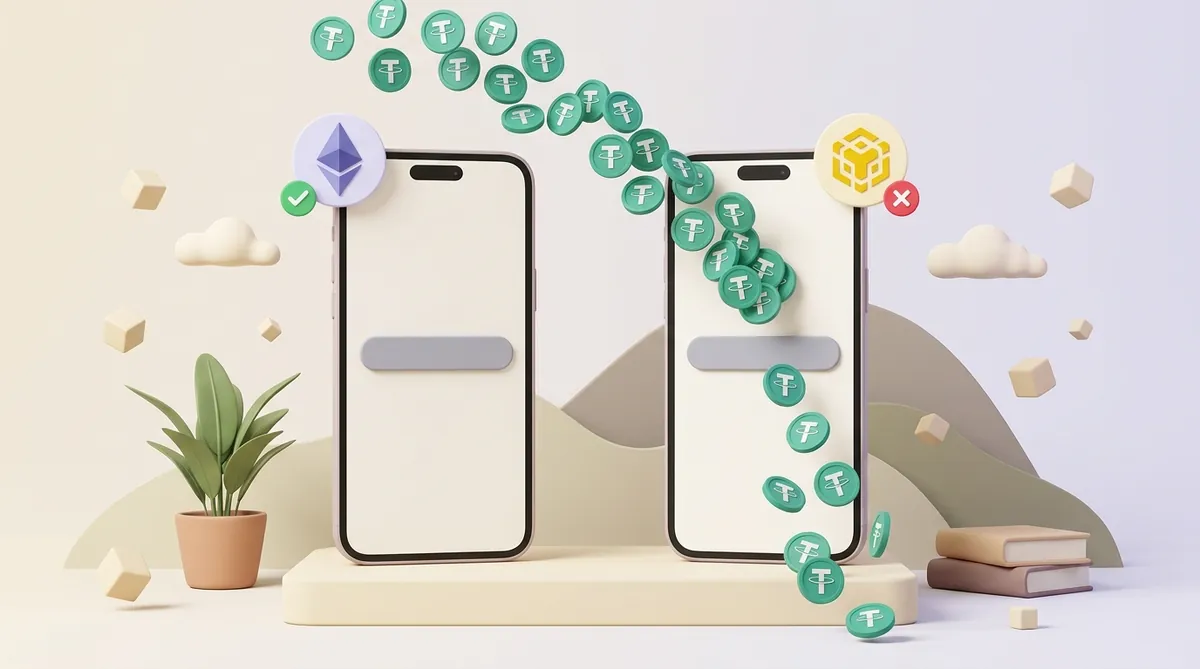
The network is the next choice, and the gaps between them are multiples. All three carry the same USDT. Figures for 6 September 2026:
The choice is not yours alone: the coins have to leave on a network the client's exchange or wallet can send from, so ask what they can send on and pick from the overlap. If BNB Chain is on both lists, take it: two dollars kept on every invoice. If TRON is all you share, pay TRON's fee — double on the first payment, about two dollars after — because a payment that arrives beats a cheaper one that can't. How to pick a USDT network for a business has the trade-offs.
The payment is received when the transaction is confirmed and the balance shows in your wallet. Not when the client says "sent", and not when a screenshot arrives: a screenshot takes a minute to fake, a transaction ID anyone can check.
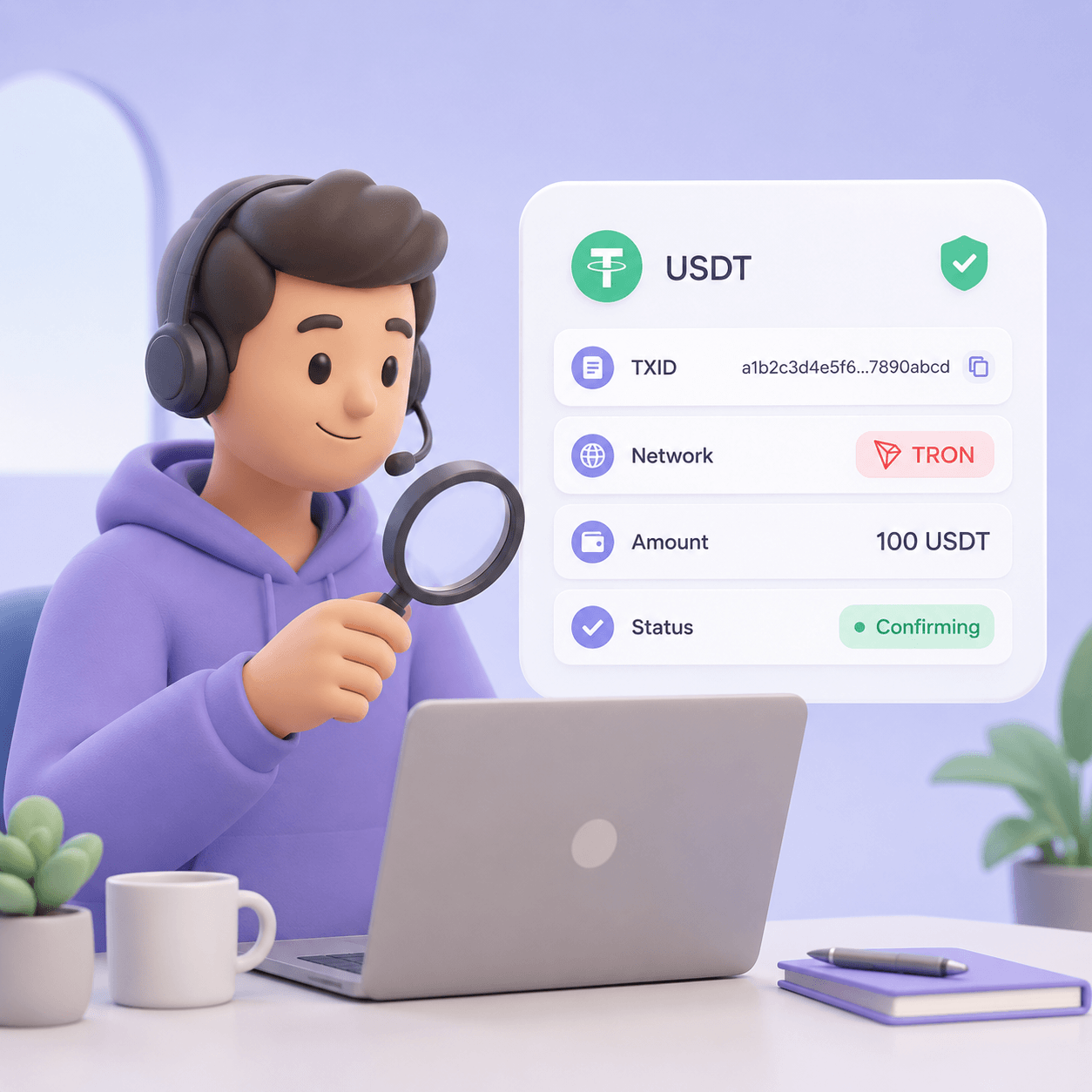
Paste the ID into a block explorer — a public search page for a network — and check the amount, the token and the receiving address. Wait until the explorer stops calling it pending; on TRON that takes about a minute. How to read a transaction in a block explorer explains each field, and how to check that a crypto payment arrived covers the "not yet" cases.
Most of it, yes — that is what a payment service sells. You make an invoice and send the client a link; they pick the coin at the checkout and get the address right there, so neither of you names or mistypes a network. The service watches the chain, waits for confirmations and marks the invoice paid.
At CryptumPay you send the client a payment link by messenger, email or wherever you already talk, and whatever coin they pay in, you are credited in USDT. The checkout locks the rate while they pay: it shows the amount in their coin at that moment's price, and converts it to USDT on arrival. That $971 slip belongs to the wallet route, where hours pass between invoice and transfer. A small shortfall confirms itself; a bigger one asks the client to pay the rest; an overpayment they claim back in the same window. The client needs no account, and there is nothing to install or code. The fee is 1% of the payment, from 0.5% at volume, and you can put it on the invoice.
The link cannot do the rest of the job: the contract, the tax record, the cash-out. One condition comes first: CryptumPay reviews every project before live payments switch on, and it needs a website showing what you do or sell, usually about a business day.
Receiving is the cheap part. The exit has three costs, and only two are knowable in advance. On that $1,000 invoice:
That third number decides whether crypto beat the bank. Ask your route what it pays today, on your amount.
Your bank may ask where the funds came from — a normal question, easier with the invoice, the contract and the transaction ID to hand. Why anyone asks where your funds came from explains what is checked, and moving between crypto and local money covers the routes.
Withdrawal terms differ between payment services: some set a minimum, some hold funds for a period, some add a fee on top of the network's. Ask in writing before you sign up. At CryptumPay, withdrawal is manual from the console, at any moment, to your own crypto wallet, with no minimum.
Three failures cover most bad first experiences:
On speed, no. On price, sometimes.
On this $1,000 invoice, straight to your wallet costs the network fee: about two dollars on TRON, double on the very first one. Through a service, add its percentage — CryptumPay's 1% is $10. Wise's published pricing shows local incoming payments free and an incoming international SWIFT payment at about $6. Your own wallet is cheapest even on that first payment, the bank second, the service third; a percentage only wins while the invoice is small.
The real trade is paperwork and recourse. A platform takes its cut and gives you an invoice trail and a dispute process if the client vanishes. With crypto you are the accounting department, and money sent to the wrong address is gone. For a repeat client that is a good deal; for a stranger, the platform's fee buys something real.
For your client's side of it, paying contractors in stablecoins is written for them.
Invoice in money, and settle the coin and the network in writing before you deliver. Write down the rate the day the money lands: that line is your tax record. Wait for the confirmation before you call it paid, and price the conversion before you decide crypto was cheaper.
The client wants to pay half up front and half on delivery. Does that work? Yes, and the split is most of your protection: crypto has no escrow and no chargeback. Two transfers, two dates, two lines in your records.
What do I give a client whose accountant wants a document? Your normal invoice, in your normal currency, with the coin, network, amount and transaction ID on it. The ID is the receipt: public, and impossible to edit.
The invoice said 1,000 USDT and only 990 arrived. What now? That is an underpayment: the sender's platform usually took its withdrawal fee out of the amount. Ask for the remaining 10 on the same network, and write "net of all fees" on the next invoice.
Create an account and connect the checkout yourself, or talk to sales and we will plan the integration with you.