
November 15, 2024
What Is Cryptocurrency and How Blockchain Works
Read article
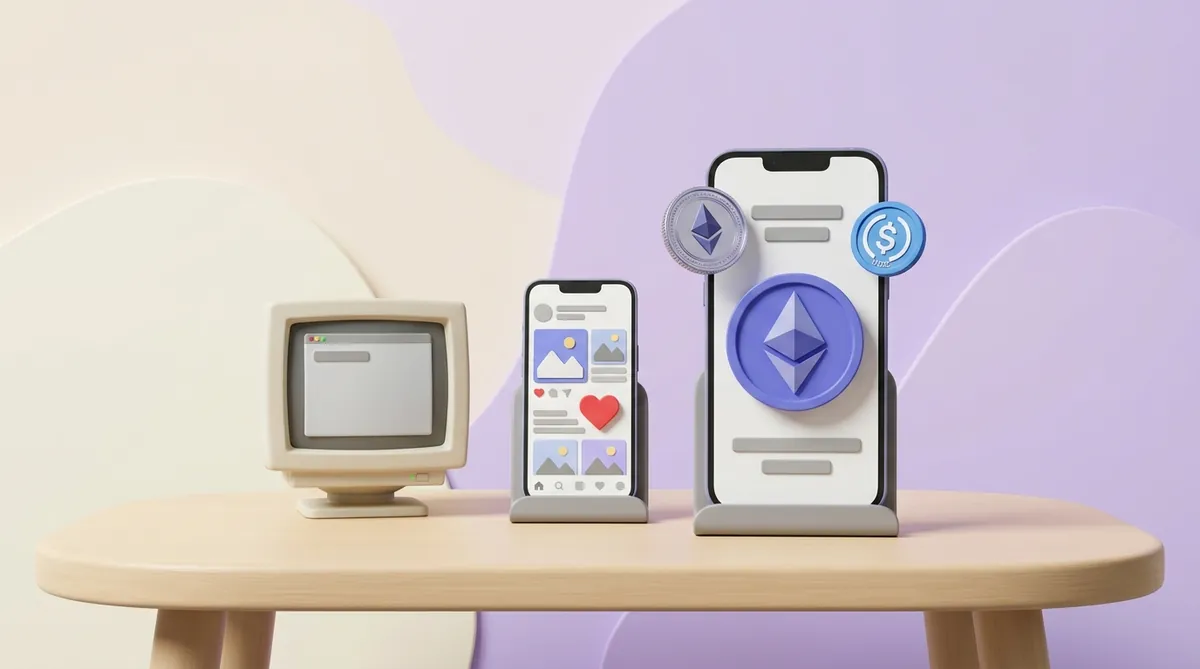
Web3 is the idea of an internet where your account, your money and the things you buy online live on a blockchain instead of on a company's server. You hold them with a private key, a secret code only you have, so no single platform can take them away by closing your account. In practice, Web3 today means apps on networks like Ethereum that you open with a crypto wallet instead of an email and a password.
The name counts versions of the internet, and each version is described by what an ordinary person could do in it:
Gavin Wood, one of the co-founders of Ethereum, used the name for this blockchain-based web in 2014. It became a mass buzzword in 2021, when interest peaked toward the end of the year along with the boom in NFTs and crypto prices.
One naming trap. "Web 3.0" is sometimes used for a different idea: the Semantic Web, Tim Berners-Lee's vision of a web of linked data that machines can read. That idea has nothing to do with crypto, and this article is about the blockchain meaning.
In Web2, a company stands in the middle of everything you do online. Your profile, followers, purchases and balance are rows in its database, and its terms of service decide what happens to them.
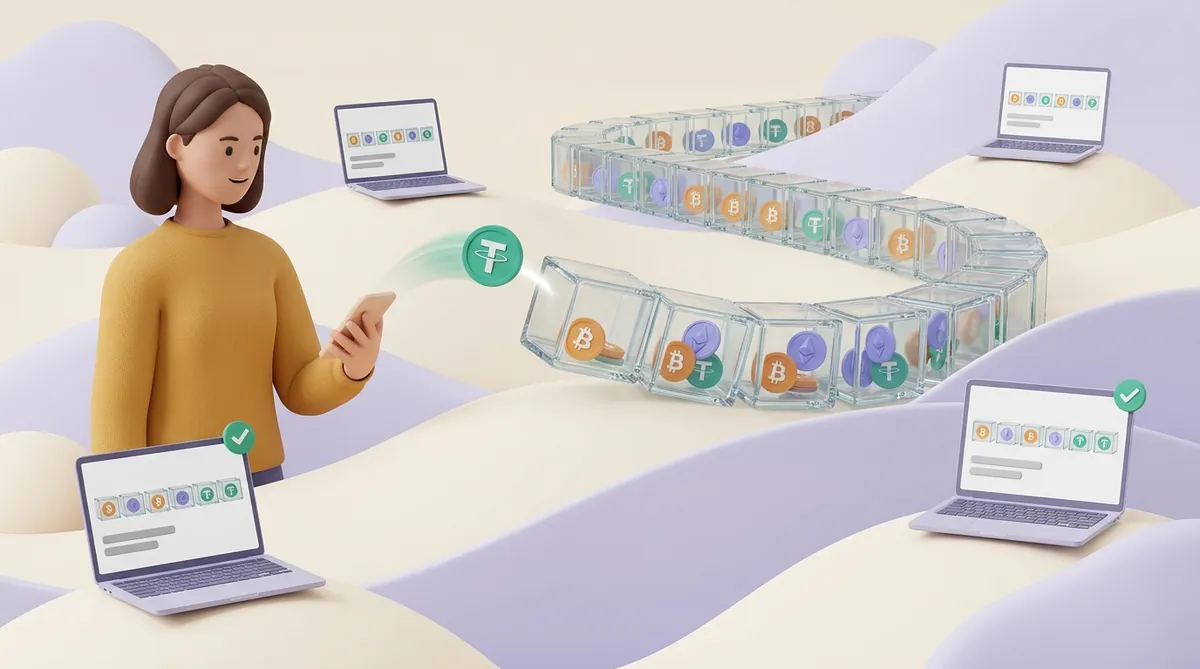
Web3 moves those rows to a blockchain: a shared record that thousands of computers keep identical copies of, so no single company can quietly rewrite it. The difference shows up in four places:
That last point has two honest limits:
Web3 does not replace the web you know. You still open a browser and visit a website; what changes is where your account and your money live while you are there.
Three pieces do the work, and each one takes over a job a company used to do:
Ethereum is the best-known network for Web3 apps, though many others do the same job. They differ in speed and fees, but the principle holds everywhere: a public record that anyone can read and that changes only through valid, signed transactions. If you want to see how such a record is built and why it is so hard to forge, start with how cryptocurrency and blockchain work.
Here is what that looks like for one person. Anna wants to swap 100 USDC, a token designed to stay worth one US dollar, for ether, the coin of the Ethereum network.
She opens a decentralized exchange in her browser and clicks "Connect wallet". Her wallet shows the site her address and nothing more.
Then she enters the amount and presses "Swap". Her wallet opens a window with what she sends, what she gets back and the network fee, which she pays in ether. She approves, and within a minute or so the exchange's program takes her USDC and sends ether to her address.
At no point did a company hold Anna's money, and no one had to approve the swap for her.
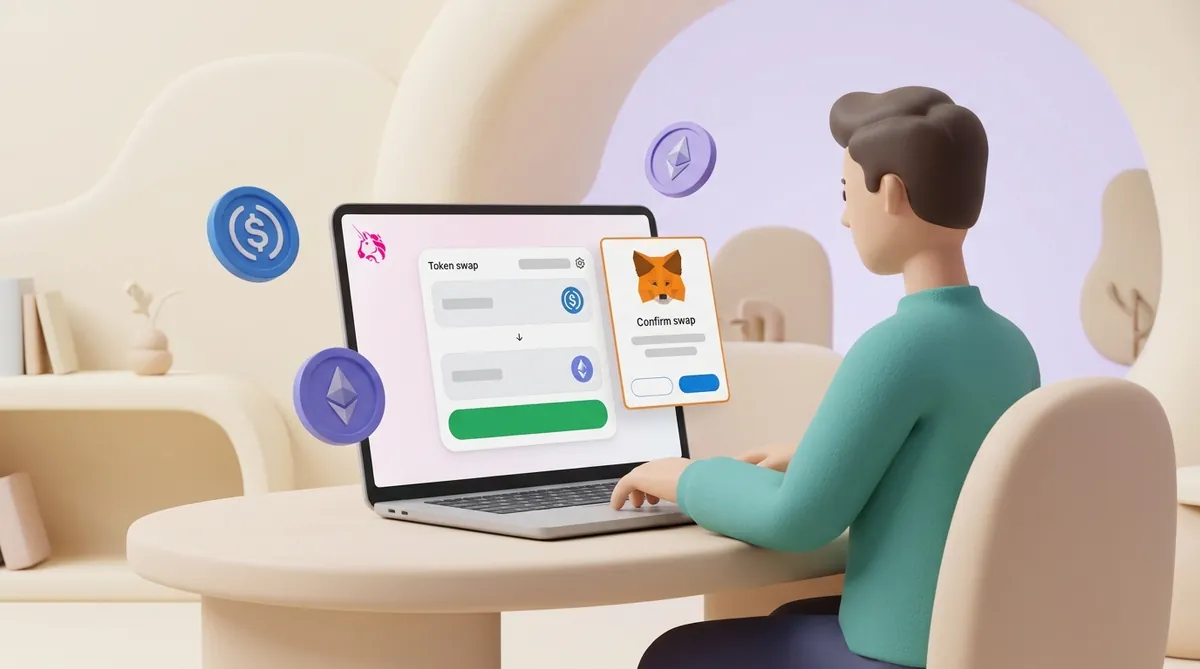
The exchange in this story is a smart contract. Its code holds a pool of tokens and sets the price by a formula that is the same for everyone who uses it. That idea runs through all of Web3, so it is worth knowing what smart contracts are and how they run on a blockchain.
These four words get mixed up all the time. Each one sits inside the next:
So Web3 and blockchain are not the same thing: the blockchain is the engine, and Web3 is everything built to run on it. Web3 is not the same as crypto either, but it cannot work without it, because every action on a public blockchain costs a fee paid in crypto, usually in the network's own coin.
That fee is called gas. On Ethereum it is normally paid in ETH, so a Web3 wallet usually needs a little ETH before it can do anything, even when the money you want to move is a token such as USDC.
Some wallets now close that gap. MetaMask, for example, can take the fee in a token such as USDC on Ethereum and several other networks. Coins and tokens differ in a few more ways that catch beginners out, so it helps to know the difference between a token and a coin.
A Web3 wallet is an app that holds your private keys and signs actions for you when a website asks. Your coins are not stored inside it. They are entries on the blockchain, and the wallet keeps the key that can move them, along with a seed phrase: a list of 12 or 24 ordinary words that can rebuild that key on another device.
Most Web3 wallets come as a browser extension, a phone app or both. When a site asks you to connect, the wallet shares only your address. Money moves only when you sign, so the signing window is the one to read slowly: it says what leaves your wallet, where it goes and what the fee is.
MetaMask is the best-known Web3 wallet, and almost every Ethereum app lists it under "Connect wallet". It works on Ethereum and on many other networks. It is also where many people first meet gas fees and network settings, so it helps to know how MetaMask handles fees, top-ups and cashing out.
"Cold wallet" describes where the key is kept, not what the wallet is for. A Web3 wallet like MetaMask is usually hot: the key sits on a computer or phone that is connected to the internet. That makes it quick to use, and it also makes the key easier to steal through malware or a careless signature.
A cold wallet keeps the key on a separate hardware device, usually the size of a USB stick. The device signs transactions inside itself, so the key never reaches the computer it is plugged into.
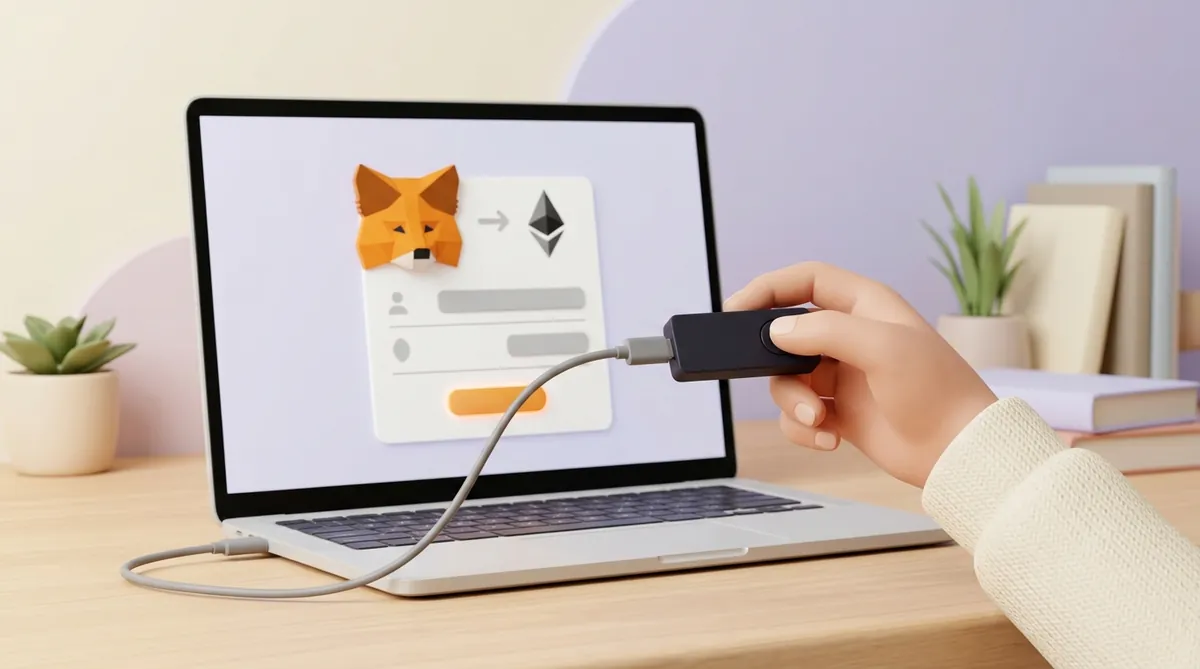
The two are not rivals. Many hardware wallets connect to MetaMask: the extension shows the app and the transaction, and the device in your hand has to confirm it before anything is sent.
One sensible setup is a hot wallet with small amounts for everyday use and a cold wallet for savings. How you split it depends on how much you hold and how often you move it, which is the whole question behind choosing a crypto wallet for your situation.
Web3 is easier to grasp through what people actually do with it. These uses work right now:
The exchanging and lending examples above are DeFi, the corner of Web3 that rebuilds financial services out of smart contracts. Every step there moves real money through code that nobody can undo, so before you try it, read up on how DeFi works, from swaps to loans.
Whether Web3 is good or bad depends on what you value more: control over your things, or someone to call when something goes wrong. It gives you three real advantages:
The price for this is real, and it lands on you:
The first of those costs is also the easiest to prevent. Your whole wallet rests on the seed phrase, and nothing else can recover it, so learn how to protect a seed phrase and private key before you put money in.
No. Blockchains, wallets and smart contracts are working technology, and people move real money with them every day. But "Web3" is also a favourite word of scammers: it sounds new and technical, and the people they target often cannot tell a real app from a copy.
The tricks repeat, and they look like this:
Each of these tricks needs your signature or your seed phrase; none of them breaks the blockchain itself. The warning signs are easy to recognise once you have seen them, so take a look at how crypto scams work and how to spot one in time.
Web3 is the part of the internet where accounts, money and digital items sit on a blockchain and you hold them with your own key. It already works for sending stablecoins, exchanging and lending crypto, digital names and items, and shared budgets. The trade is control for responsibility: nobody can take your things away, and nobody can give them back if you lose the key.
The word is far less fashionable than it was at its peak at the end of 2021. The technology under it kept running: people still send stablecoins, swap tokens on decentralized exchanges and sign in to apps with wallets. The buzzword faded; the tools it described stayed in use.
Nobody can say for sure, but the uses getting the most serious attention are the ones that already work: moving dollars as stablecoins, settling payments between businesses, and issuing traditional assets such as fund shares and bonds as tokens on a blockchain. Ownership of game items, tickets and online identities is being tried too, with less clear results so far.
It means games where items, characters or in-game money are tokens in your wallet, so you can sell them outside the game. The game itself usually still runs on the studio's servers, and the studio decides what those items can do. If the studio shuts the game down, the tokens stay in your wallet, but they may no longer be useful for anything.
This article explains how a technology works; it is not investment, legal or tax advice.
Create an account and connect the checkout yourself, or talk to sales and we will plan the integration with you.