

November 15, 2024
What Is Cryptocurrency and How Blockchain Works
Read article

Crypto payment trends in 2026 are no longer about adding a Bitcoin button to checkout and waiting to see what happens. For online businesses, the real questions are more practical: how easy is the payment for the customer, which stablecoins should be supported, who pays network fees, how are failed payments handled, how does the finance team reconcile transactions, and what risk controls are in place?
Crypto payments are moving from a niche payment option into a broader payment infrastructure layer for SaaS, marketplaces, iGaming, VPN services, hosting, mobile apps, Telegram commerce, digital products and international businesses. But that does not mean every company needs to accept every coin on every network: what selling digital products for crypto requires is a shorter list.
The winners in 2026 will not be the businesses with the longest list of supported tokens. They will be the ones that make crypto payments reliable, understandable and operationally manageable.
For many businesses, the practical crypto payment conversation now starts with stablecoins. BTC and ETH still matter, especially for crypto-native users, Web3 products and customers who prefer holding major assets. But for everyday online payments, USDT and USDC are often easier to understand because they are priced around a familiar unit of account.
This is especially important for businesses that sell subscriptions, top-ups, digital services, credits, gaming balances, hosting, courses or international B2B services. A customer may be willing to pay in crypto, but the merchant usually wants predictable revenue, clean reconciliation and less exposure to price swings.
That shifts the payment decision from “Should we accept crypto?” to more specific operational questions:
Stablecoins do not remove every risk. There are still questions around regulation, liquidity, issuer risk, network choice, wallet screening and jurisdiction. But they do make crypto payments easier to connect with real business operations.
For companies working with European customers, stablecoin acceptance now has to be considered alongside regulation. The practical angle is covered in the guide to stablecoin payments in Europe after MiCA.
A weak crypto payment experience creates support tickets. The customer may choose the wrong network, send the wrong amount, forget to keep TRX, ETH or BNB for gas, pay after the invoice expires or send funds from a wallet that triggers a risk review.
From the customer’s perspective, the problem is simple: “I paid, but my order is not active.” From the business side, it becomes a manual investigation involving wallet addresses, screenshots, timestamps, transaction hashes and support agents.
In 2026, crypto checkout has to compete with familiar payment behavior. Customers are used to cards, Apple Pay, Google Pay, local wallets and one-click payments. They may understand crypto, but they still expect the payment page to guide them.
A strong crypto payment flow should include:
This is why “accept USDT” is not enough by itself. A user may hold USDT but still fail to pay because they do not have the native network coin required for gas. A customer paying USDT on TRON may need TRX. On Ethereum, they may need ETH. On BNB Smart Chain, they may need BNB.
For businesses, that is not a small detail. It affects checkout conversion, payment success rate and support workload. The issue is explained in more detail in gasless USDT payments.
Many businesses still treat failed crypto payments as a support issue. In reality, they are also a growth issue.
A failed payment usually means the customer already had enough intent to buy, deposit, renew, top up or unlock access. Losing that customer at the payment step is expensive because the business has already paid for acquisition, onboarding and product education.
That is why crypto payment teams should track more than completed volume. They should also track:
This matters most for businesses where payments are part of the product loop: SaaS, iGaming, hosting, GPU cloud, mobile apps, Telegram bots, marketplaces and internal balance systems. If the payment flow is confusing, users may not come back to retry.
Improving crypto payment conversion does not always require a new payment method. Sometimes the biggest gains come from clearer statuses, better network guidance, gas fee handling, saved payment flows and support visibility. A practical checklist is available in how to reduce failed crypto payments.
Crypto payments can no longer be treated as “just a wallet address on a website.” Businesses have to think about jurisdiction, customer type, transaction risk, sanctions exposure, source-of-funds signals, provider responsibilities and internal policies.
MiCA in the European Union is one important example, but it is not the only regulatory consideration. Requirements differ by country, business model, provider role, customer location and the type of crypto asset being accepted. A payment setup that makes sense for one business may not be appropriate for another.
For that reason, AML and risk controls should be part of the payment design from the beginning. They should not appear only after a suspicious transaction creates a problem.
Before choosing a crypto payment provider, businesses should ask:
AML should not make every digital purchase feel like a bank onboarding process. But businesses do need a clear framework for which payments are accepted, reviewed, blocked or escalated. The broader risk-control topic is covered in secure crypto payments, AML and KYC.
For technical teams, crypto payments are not just about generating an address and waiting for a transaction. A production payment system needs order IDs, statuses, webhooks, retries, underpayment logic, invoice expiration, network handling, reconciliation and error visibility.
A weak API can make a cheap payment method expensive. If the payment status is unclear, webhooks are unreliable or support teams cannot match a transaction to an order, the business pays for that complexity in engineering time and manual operations.
In 2026, CTOs should evaluate crypto payment APIs the same way they evaluate other payment infrastructure. Important questions include:
For a simple website, a widget may be enough. For SaaS platforms, apps, marketplaces, iGaming products and internal balance systems, API depth is usually more important than the visible checkout page.
The technical evaluation is covered in the crypto payment API checklist. If the project is simpler or needs a fast launch, compare that with the HTML widget for crypto payments.
For finance teams, crypto payments are not complete when a customer sends funds. The payment has to be connected to an order, customer, pricing currency, received asset, network, fee, exchange rate, confirmation time, settlement flow and withdrawal record.
At low volume, some of this can be handled manually. At scale, manual reconciliation becomes a hidden cost. It also creates risk: missing payments, unclear balances, unsupported screenshots, inconsistent exchange-rate records and hard-to-audit withdrawals.
A CFO or finance operations lead should define:
Stablecoins can reduce volatility compared with BTC or ETH, but they do not remove the need for controls. Businesses still need reporting, access management, withdrawal policies, risk checks and a clear settlement process.
This is why crypto payment processing is becoming a finance operations topic, not just a growth experiment. The CFO perspective is explained in stablecoin payment operations for CFOs.
Traditional crypto checkout often feels like a manual transfer: copy an address, choose a network, enter an amount, pay gas, wait for confirmation. That can work for a one-time purchase. It is much less suitable for products that depend on repeat payments.
SaaS, VPN services, hosting, iGaming, paid communities, mobile apps and Telegram bots need repeat purchases, balance top-ups, renewals or deposits. If every payment feels like a new manual transfer, the product loses momentum.
Crypto does not always work like card subscriptions. A business should not assume that recurring crypto payments can simply copy card auto-renewal. But it can design a smoother repeat-payment experience after the first successful payment.
Useful patterns include:
This trend is especially relevant for usage-based products. A hosting provider may need quick balance top-ups, which brings its own questions about payment statuses and how hosts handle crypto refunds. A SaaS product may need renewals. An iGaming platform may care about repeat deposits. A Telegram bot may need frictionless paid access.
The SaaS-specific logic is covered in recurring crypto payments for SaaS.
For many companies, the first step is accepting a customer payment. The next step is harder: distributing funds, reconciling orders, paying sellers, crediting balances, handling fees and managing risk.
That is why marketplaces, creator platforms, affiliate networks, ad networks, gaming platforms and B2B platforms are becoming important crypto payment use cases. In these businesses, the payment is not a single transaction. It is part of a multi-party flow.
A marketplace accepting crypto has to decide:
This is a different problem from simply adding crypto checkout to an online store. Marketplaces need payment operations, not only payment acceptance. The topic is covered in crypto payments for marketplaces.
Payment service providers and fintech platforms are under pressure to add stablecoins and crypto payments without turning the roadmap into a multi-year blockchain infrastructure project.
There are three main options:
Building internally gives more control, but it also requires wallet infrastructure, network support, blockchain monitoring, AML screening, payment statuses, merchant reporting, withdrawal workflows, security controls and support processes.
A white-label model can be useful when a PSP wants to offer crypto payments as part of its own product while relying on specialist infrastructure behind the scenes. The important question is not only whether the checkout can be branded. PSPs need to understand how deeply the provider can support statuses, webhooks, merchant reporting, risk controls, settlement and support.
For PSPs, crypto payments are not just another method in a list. They can become a new product line. The build-versus-buy decision is covered in white-label crypto payment gateway for PSPs.
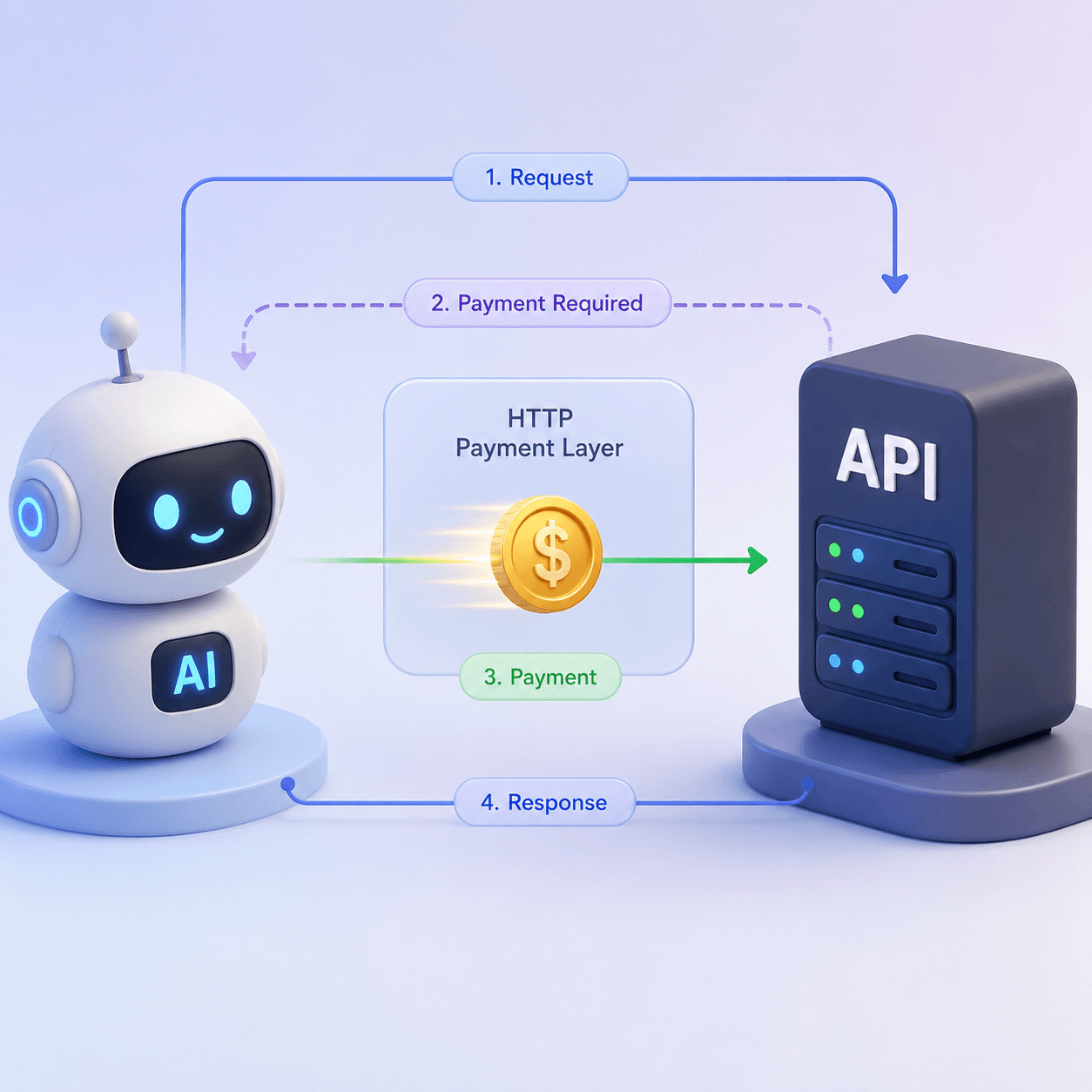
x402 brings back the idea of HTTP 402 Payment Required. In simple terms, an API, application or AI agent can receive a payment request directly in the web interaction and pay with a stablecoin.
This is not yet a mainstream checkout replacement for every business. A regular e-commerce store, SaaS dashboard or iGaming product should not rebuild its payment stack around x402 just because the trend is new. But for API products, developer tools, paid data, AI agents, scraping services, inference, cloud tools and machine-to-machine workflows, the model is worth watching.
x402 is interesting because it fits pay-per-use economics. Instead of requiring a user to create an account, buy credits, manage an API key and prepay for a package, a service can request payment at the moment access is needed.
Before experimenting with x402, teams should ask:
For most businesses, x402 is an emerging layer rather than the core payment method. For API-first products, it may become strategically important. The practical developer angle is covered in x402 payments for AI and API products.
Crypto payments are not replacing cards, bank transfers, local wallets, account-to-account payments or invoices. They are becoming one part of a broader payment mix.
A business should not ask, “Should we use crypto instead of cards?” A better question is, “Where do crypto payments solve a problem that our current methods do not solve well?”
Crypto and stablecoin payments can be useful when:
For many businesses, the best payment stack will be hybrid:
Crypto payments work best when they are added for a clear reason. Without a clear use case, they can become a noisy payment option. With the right use case, they can reduce friction, add coverage and support international growth.
It is not enough to say that blockchain is secure. Businesses need to secure the payment operation around blockchain transactions.
On-chain payments can be transparent and final, but operational risks remain. A company still has to handle phishing, suspicious wallets, wrong addresses, compromised accounts, employee access, manual withdrawals, webhook security, integration bugs and incomplete reporting.
In 2026, crypto payment security should include:
For the customer, security should feel like a guided payment that prevents avoidable mistakes. For the business, security should mean visibility, controls, reporting and the ability to respond when something does not look right.
Do not start by asking which coins to add. Start with the business problem.
Crypto payments may be useful if customers cannot easily pay by card, if international bank transfers are slow, if users already hold USDT, if failed payments are hurting conversion, if your product relies on fast top-ups, or if your platform needs crypto settlement and payouts.
Once the use case is clear, define the operating model:
Only after that should the business compare providers, fees, API documentation, widgets, white-label options, settlement rules and support.
A low headline fee is not enough. A payment method that creates manual reconciliation, unclear statuses and support tickets can be more expensive than it looks.
CryptumPay is a crypto payment gateway for businesses that need to accept crypto payments on websites, apps, Telegram bots or other digital platforms. In the context of 2026 trends, the important point is not simply that it supports crypto. It is how the payment flow helps reduce avoidable friction.
CryptumPay supports a QR/app payment scenario, repeat payments after the first successful payment, automatic conversion to USDT, personal account controls, withdrawals, AML checks, 2FA, API, HTML widget and White Label options. It also helps handle network fee issues that often cause failed payments or incorrect amounts.
This makes the product especially relevant for digital businesses where payment is part of the product experience: SaaS, iGaming, VPN, hosting, mobile apps, Telegram commerce, marketplaces, digital products and international services.
Crypto payments are worth considering if your business has one or more of these signals:
Crypto payments may be less urgent if your business operates only in one local market, customers rarely use crypto, average order value is too low for the chosen network fees, or regulation makes the payment model too complex for your current stage.
In that case, the best first step may be a limited test: one market, one product line, one stablecoin path, or a payment method shown only to customers who are likely to use it.
Crypto payments in 2026 are becoming more mature, but also more operationally demanding. The trend is not simply “more businesses will accept crypto.” The real trend is that crypto payments are becoming part of payment infrastructure: stablecoins, networks, gas fees, payment statuses, APIs, AML, reconciliation, settlement, repeat payments and platform workflows.
Businesses that treat crypto as a marketing badge will likely create payment errors and manual work. Businesses that design the payment flow carefully can use crypto and stablecoins as a practical layer for international customers, digital products, repeat payments and operational flexibility.
The biggest trend is the shift from generic crypto acceptance to stablecoin-based payment operations. Businesses care about USDT and USDC support, network choice, gas fees, payment statuses, AML, reconciliation, settlement and repeat payment flows.
Stablecoins are often easier for everyday business payments because their value is tied to a familiar currency. Bitcoin can still make sense for crypto-native users or specific audiences, but stablecoins are usually more practical for pricing, settlement and reconciliation.
Being tied to a familiar currency still leaves open who stands behind the balance. A dollar on a blockchain can come from a stablecoin issuer or from a bank recording your deposit in token form, and for a finance team those are not the same thing to hold. What that difference does to pricing, settlement and reconciliation is the subject of how tokenized bank deposits compare with stablecoins in payments.
MiCA adds a more formal regulatory framework for crypto-assets in the EU. Businesses accepting stablecoins in Europe should consider token status, provider responsibilities, AML checks, reporting, customer location and jurisdiction-specific requirements.
Not for most businesses. x402 is more relevant for APIs, AI agents, developer tools and pay-per-use services. Standard SaaS, e-commerce and iGaming products should first focus on reliable checkout, payment statuses, gas handling and reconciliation.
Start with network clarity, exact invoice amounts, gas fee guidance, QR or app-based payment flow, automatic status updates, underpayment handling and support visibility. Many failed payments come from preventable mistakes in the payment experience.
Create an account and connect the checkout yourself, or talk to sales and we will plan the integration with you.