
November 16, 2024
Full Tether (USDT) Guide: how it works, commissions, payment acquiring
Read article

USDT by Tether has become the de facto stablecoin for crypto payments. It's reliable, easy to use, and available on nearly every exchange. But here’s the catch: USDT exists in multiple formats — ERC20, TRC20, BEP20, SPL, and more. This isn’t just a technical quirk. Each format affects transaction fees, speed, and user experience.
For businesses accepting crypto, understanding these differences isn’t just about blockchain infrastructure — it’s a financial decision. Fees in one network might be 50 times higher than in another. Some formats are great for DeFi, others for retail payments, and some are confusing to end users.
In this article, you’ll learn:
USDT is a multichain stablecoin — unlike Bitcoin, it’s issued on multiple blockchains including Ethereum, Tron, BNB Chain, Solana, Polygon, Algorand, and others.
Why so many?
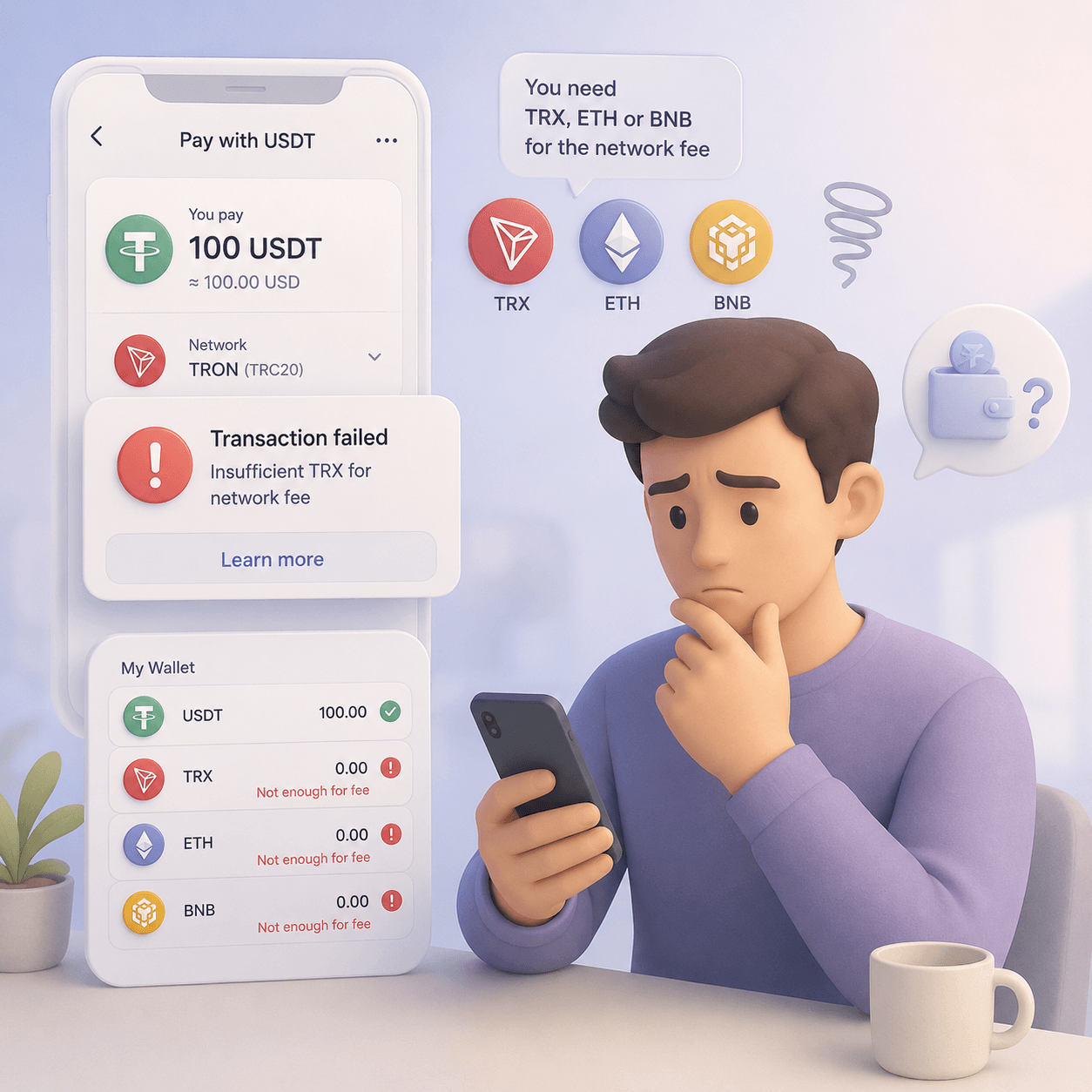
But the downside? Different networks = different tokens. That means separate wallets, different fees, and the risk of failed payments if a user chooses the wrong network.
This can be a nightmare for businesses — unless the crypto payment process is automated and smart.
🔹 Network: Ethereum
🔹 Fees: high ($5–$50 depending on congestion)
🔹 Speed: moderate (1–10 minutes)
🔹 Wallet support: nearly universal
🔹 Pros: trusted, liquid, well-established
🔹 Cons: expensive, especially for small payments
💡 Common use cases:
🔹 Network: Tron
🔹 Fees: almost zero (under $0.01)
🔹 Speed: fast (1–2 seconds)
🔹 Wallets: TronLink, TrustWallet, Binance, etc.
🔹 Pros: fast and cheap
🔹 Cons: requires TRX to pay gas fees
💡 Common use cases:
🔹 Network: BNB Chain
🔹 Fees: low (up to $0.30)
🔹 Speed: fast (~5 seconds)
🔹 Wallets: TrustWallet, Metamask, SafePal, etc.
🔹 Pros: cheap and quick
🔹 Cons: Binance-centric ecosystem
💡 Common use cases:
🔹 Network: Solana
🔹 Fees: under $0.001
🔹 Speed: near-instant
🔹 Wallets: Phantom, Solflare, TrustWallet
🔹 Pros: perfect for mobile payment solutions and Web3
🔹 Cons: less wallet compatibility
💡 Common use cases:
🔹 Network: Polygon
🔹 Fees: around $0.01
🔹 Speed: very fast (under 2 seconds)
🔹 Wallets: Metamask, TrustWallet, etc.
🔹 Pros: Ethereum-compatible, minimal fees
🔹 Cons: confusion between ERC20 and Polygon is common
💡 Common use cases:
🔹 Network: Avalanche
🔹 Fees: low (up to $0.20)
🔹 Speed: fast (~2 seconds)
🔹 Wallets: Metamask, Core, TrustWallet
🔹 Pros: EVM-compatible
🔹 Cons: limited adoption
💡 Common use cases:
🔹 Network: Algorand
🔹 Fees: nearly zero
🔹 Speed: fast (up to 4 seconds)
🔹 Wallets: Pera, MyAlgo, Exodus
🔹 Pros: high throughput, low cost
🔹 Cons: low user awareness
💡 Common use cases:
🔹 Network: Arbitrum (Layer 2 on Ethereum)
🔹 Fees: 5–10x lower than Ethereum
🔹 Speed: quick (1–2 minutes)
🔹 Wallets: Metamask, TrustWallet, OKX Wallet, etc.
🔹 Pros: cheaper and scalable
🔹 Cons: not all wallets support it out of the box
💡 Common use cases:
The short answer: it doesn’t matter — as long as your system can handle them all.
With CryptumPay crypto processing service, your business can accept USDT in Ethereum, Tron, Polygon, Solana, and BNB Chain. The platform automatically detects the network, adjusts for fees, and ensures the transaction goes through even if the client has no native gas token.
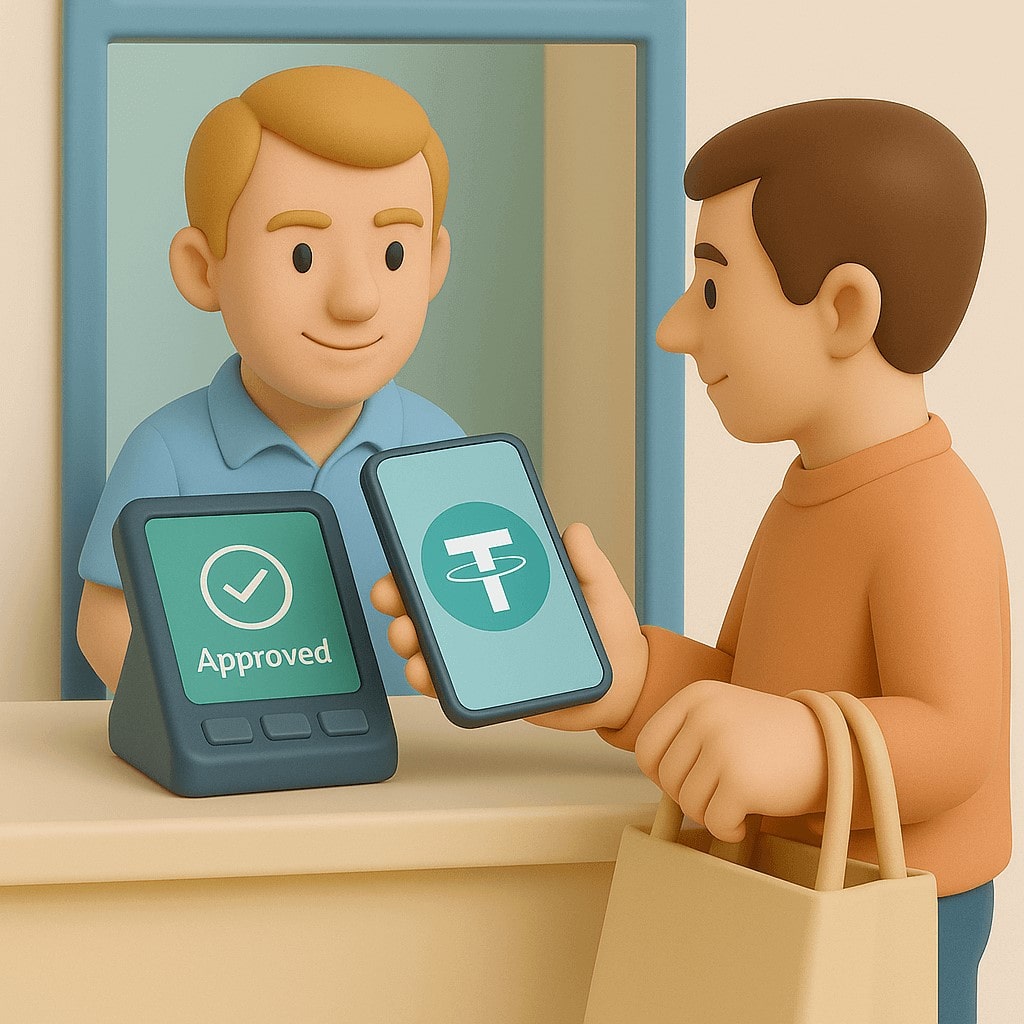
No failed payments. No manual intervention. Just smooth USDT processing.
TRC20, SPL, and Polygon are the lowest-cost networks. CryptumPay ensures you can accept them all without worrying about fees.
To increase accessibility and reduce reliance on a single blockchain. It helps with scalability and flexibility.
CryptumPay sends the needed token (e.g. TRX, ETH) during the transaction and adjusts the USDT total to cover it.
TRC20, SPL, and Polygon — due to low fees and high speed they are often used in e-commerce stores.
No. CryptumPay handles all logic automatically. Just integrate once — the system takes care of everything else.
Every USDT format serves a purpose — from high-volume retail to DeFi power users. But that doesn’t mean your business should deal with the technical complexity.
Start accepting USDT payments the way they should work: simple, seamless, and cross-network. Try CryptumPay today.
Create an account and connect the checkout yourself, or talk to sales and we will plan the integration with you.